
April 09, 2026 – AI Daily Recap

From Anthropic withholding its most powerful model over cybersecurity fears to OpenAI proposing robot taxes and a four-day workweek, today’s AI landscape is as much about policy and restraint as it is about raw capability. Meanwhile, DeepSeek edges closer to releasing a trillion-parameter model on non-NVIDIA chips, a Tufts University team slashes AI energy use by 100x, NVIDIA spotlights the rise of physical AI during National Robotics Week, and Utah quietly expands its AI prescription renewal pilot into psychiatric care.
Anthropic Unveils Claude Mythos Preview — Then Keeps It Under Lock and Key
Anthropic made waves this week by announcing Claude Mythos Preview, its most capable frontier model to date — and then immediately declining to release it to the public. The model, which Anthropic describes as a generational leap in coding and agentic tasks, has already discovered thousands of previously unknown zero-day vulnerabilities across critical infrastructure, dwarfing the roughly 500 found by its predecessor Opus 4.6. Instead of a broad launch, Anthropic is funneling access through Project Glasswing, a defensive-security partnership with Amazon, Apple, Microsoft, Google, CrowdStrike, Palo Alto Networks, and others. The decision underscores a growing tension in the industry: models are becoming powerful enough that responsible deployment may mean not deploying at all.
OpenAI Pitches Robot Taxes, a Public Wealth Fund, and a Four-Day Workweek
OpenAI released a 13-page policy blueprint titled “Industrial Policy for the Intelligence Age”, proposing sweeping changes to how the economy should adapt to AI-driven automation. The headline items: a robot tax where automated systems pay the equivalent taxes of the human workers they replace, an Alaska Permanent Fund-style public wealth fund that would give citizens a direct stake in AI-driven growth, and pilots for a 32-hour workweek. The document also envisions auto-triggering safety nets that expand government assistance when AI-related job displacement crosses defined thresholds — no new legislation required. Critics note the timing is convenient, arriving just ahead of OpenAI’s anticipated IPO, but the proposals are among the most concrete economic frameworks any major AI lab has put forward.
DeepSeek V4 Inches Closer to Launch on Huawei Chips
DeepSeek is signaling that its highly anticipated V4 model could drop this month, after the company rolled out a significant product update on April 8 introducing “Fast Mode” and “Expert Mode” tiers — widely seen as infrastructure prep for the new model. V4 is a one-trillion-parameter multimodal model handling text, image, and video natively, though only about 37 billion parameters activate per query via a mixture-of-experts architecture. What makes V4 potentially seismic is that it will reportedly run on Huawei’s Ascend 950PR chips rather than NVIDIA hardware, making it the first frontier model trained entirely outside the NVIDIA ecosystem. If benchmarks hold — and early leaks suggest 81% on SWE-bench at $0.30 per million tokens — DeepSeek V4 could be the cheapest frontier model by a factor of 50x, with fully open weights.
Neuro-Symbolic AI Breakthrough Slashes Energy Use by 100x
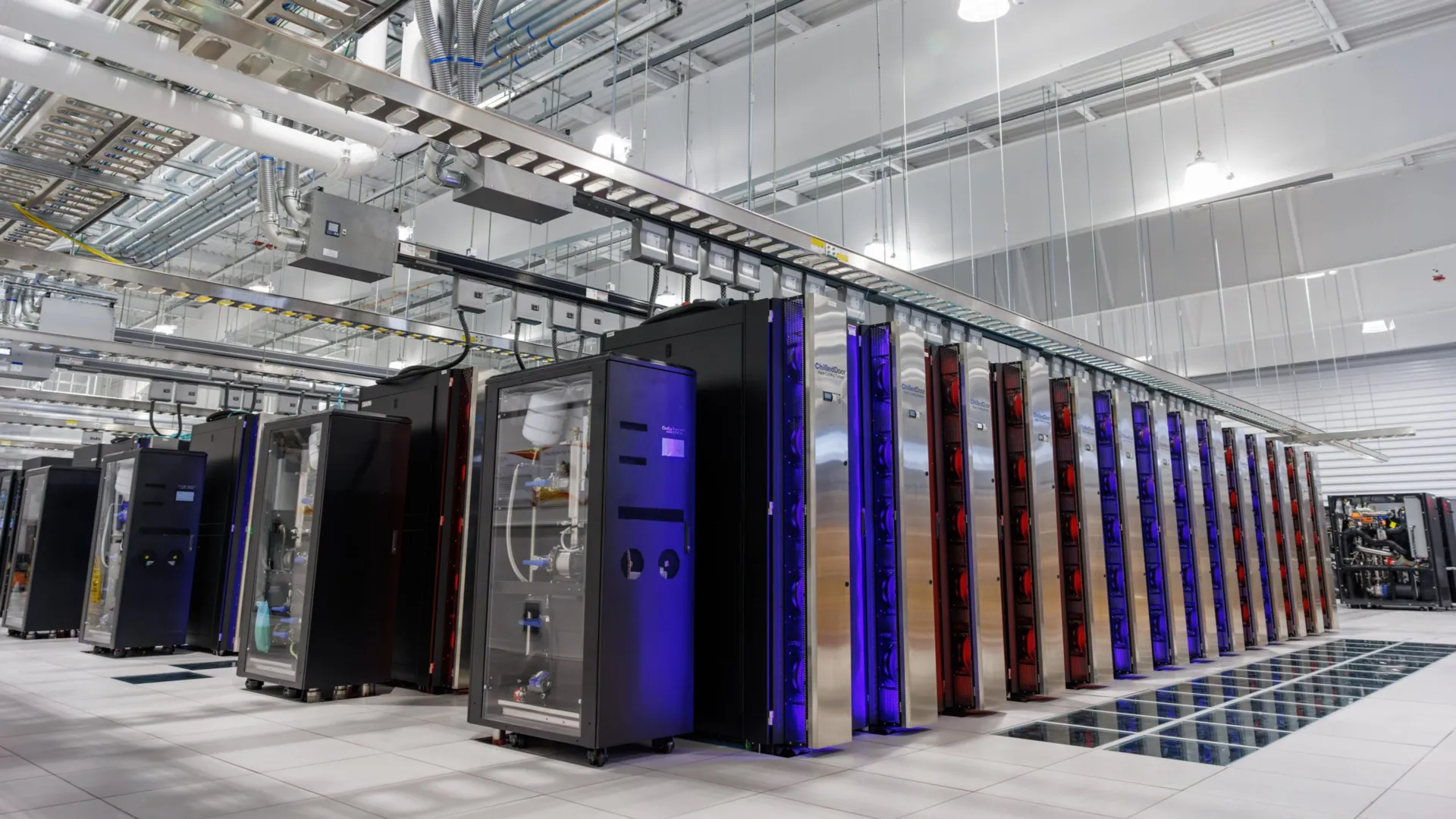
Researchers at Tufts University’s School of Engineering have published results showing a neuro-symbolic AI approach that cuts energy consumption by up to 100x while actually improving accuracy. The proof-of-concept system, led by Professor Matthias Scheutz, merges traditional neural networks with symbolic rule-based reasoning and achieves a 95% success rate on complex tasks where conventional systems fail two-thirds of the time. The timing is critical: U.S. data centers and AI operations now consume more than 10% of the nation’s total electricity, a figure projected to double by 2030. If neuro-symbolic methods can scale, they could meaningfully change the economics and environmental footprint of running frontier AI systems.
NVIDIA Spotlights Physical AI During National Robotics Week

NVIDIA is using National Robotics Week to showcase the rapid progress of what it calls “physical AI” — intelligent systems that operate in the real world rather than behind a screen. The company highlighted three pillars driving the shift: advanced robot learning, high-fidelity simulation via NVIDIA Omniverse and Isaac Sim, and foundation models that let robots generalize across tasks. Real-world deployments are already underway: Maximo recently completed a 100-megawatt solar installation using its NVIDIA-powered robot fleet, while Aigen’s solar-driven rovers use vision AI for precision weed control, eliminating chemical herbicides on farms. The message from NVIDIA is clear — the era of AI confined to data centers is ending, and the robots are heading outdoors.
Utah Expands AI Prescription Renewals Into Psychiatric Care

Utah regulators have cleared Y Combinator-backed Legion Health to let its AI system renew certain psychiatric prescriptions without a doctor signing off each time. The $19-a-month pilot, which runs for one year and covers non-controlled maintenance medications, builds on Utah’s groundbreaking January 2026 partnership with Doctronic that first allowed AI to autonomously renew prescriptions for 192 drugs treating chronic conditions like hypertension and diabetes. The expansion into psychiatric medications is notable because it pushes AI into an area of medicine that typically demands more nuanced clinical judgment. Safeguards remain in place — human physicians review AI output for early patients, complex cases are automatically escalated, and initial prescriptions still require a human doctor.
The Big Picture
Today’s stories paint a picture of an AI industry grappling with its own power. Anthropic’s decision to withhold Mythos Preview and OpenAI’s policy proposals both signal that the leading labs are no longer just racing to build — they’re actively wrestling with what happens when these systems reach society at scale. Meanwhile, DeepSeek V4’s potential launch on Huawei chips could reshape the geopolitics of AI compute, and the Tufts energy breakthrough suggests there may be paths to powerful AI that don’t require burning through a tenth of the national grid. Whether it’s robots tending solar farms or AI renewing prescriptions, the technology is moving from the abstract to the tangible — and the policy frameworks are struggling to keep pace.
Sources
- Anthropic debuts preview of powerful new AI model Mythos in new cybersecurity initiative — TechCrunch
- Anthropic is giving some firms early access to Claude Mythos — Fortune
- Anthropic’s Claude Mythos Finds Thousands of Zero-Day Flaws — The Hacker News
- Anthropic withholds Mythos Preview model — Axios
- OpenAI’s vision for the AI economy — TechCrunch
- Sam Altman proposes robot tax — Newsweek
- OpenAI on robot taxes, public wealth fund — Quartz
- DeepSeek V4 may launch this month — TechNode
- DeepSeek V4: 1T Parameters, 81% SWE-bench — NxCode
- DeepSeek V4: Release Date, Specs, and the Huawei Chip Bombshell — FindSkill.ai
- AI breakthrough cuts energy use by 100x — ScienceDaily
- 100x Less Power: The Breakthrough That Could Solve AI’s Energy Crisis — SciTechDaily
- AI system could cut energy use by up to 100 times — E&T Magazine
- National Robotics Week — NVIDIA Blog
- NVIDIA GTC Showcases Virtual Worlds Powering Physical AI — NVIDIA Blog
- Legion Health AI Cleared for Utah Patients — PYMNTS
- Utah allows nation’s first AI drug prescriptions — Axios
- Utah’s Experiment With AI-Driven Prescription Renewals — Stanford Law School



Responses