
May 11, 2026 – AI Daily Recap


The AI industry showed no signs of slowing down this past week, with massive capital commitments, major model upgrades, enterprise platform overhauls, and a landmark cybersecurity initiative all competing for headlines. Here’s what you need to know.
Nvidia Surpasses $40 Billion in AI Equity Bets

Nvidia has committed more than $40 billion in AI equity investments in early 2026 alone, anchored by a staggering $30 billion bet on OpenAI. Beyond that flagship deal, the chipmaker struck agreements to invest up to $3.2 billion in glassmaker Corning and up to $2.1 billion in data center operator IREN. According to FactSet, Nvidia participated in roughly two dozen private startup investment rounds so far this year. The strategy is clear: finance the entire AI supply chain to ensure it runs on Nvidia hardware. Critics call it a circular investment loop, but analysts suggest it could build a durable competitive moat.
OpenAI Makes GPT-5.5 Instant the Default ChatGPT Model
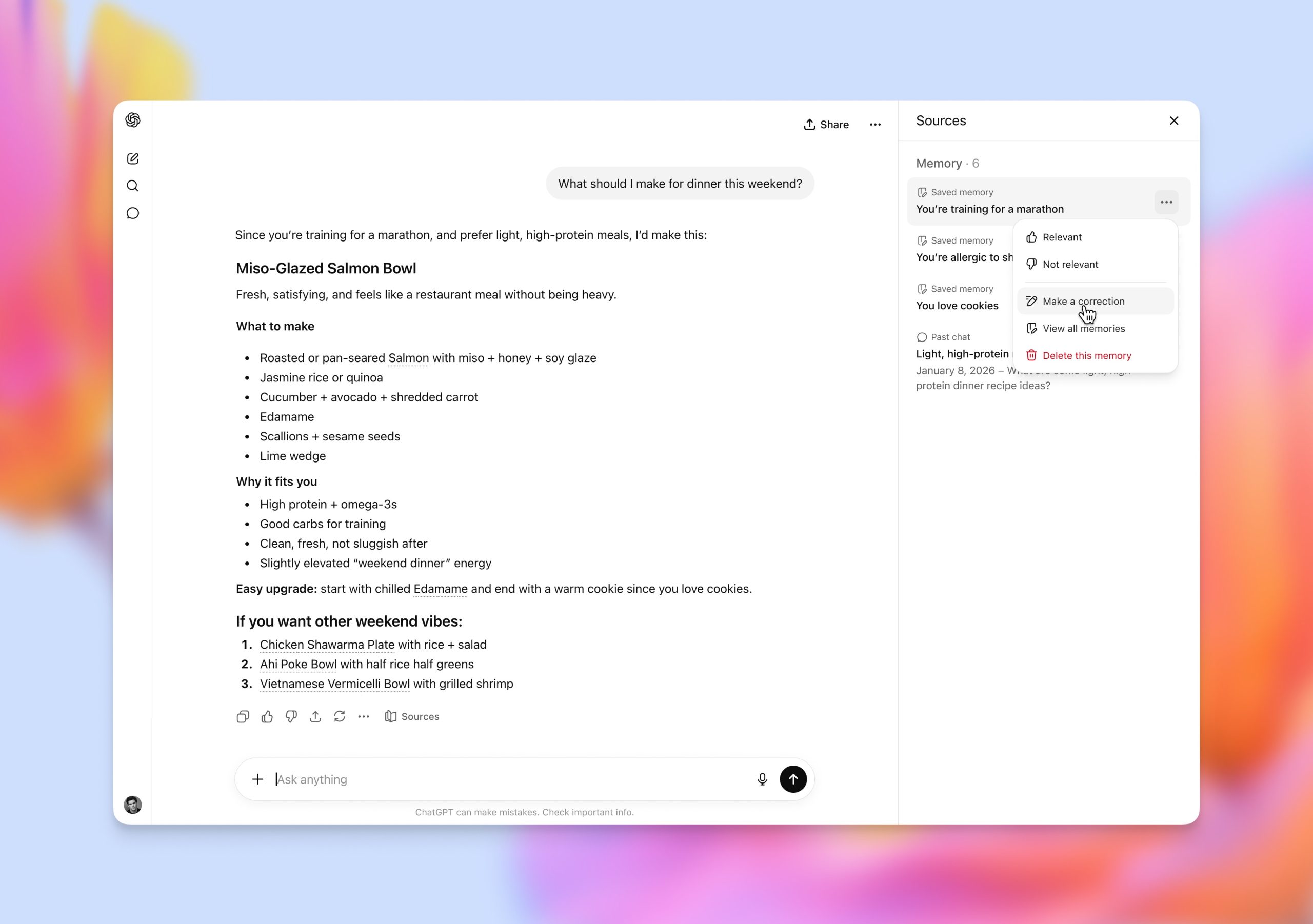
OpenAI rolled out GPT-5.5 Instant as ChatGPT’s new default model, replacing GPT-5.3 Instant. The upgrade delivers measurable gains: 52.5% fewer hallucinated claims on high-stakes prompts in medicine, law, and finance, plus a 37.3% reduction in inaccurate claims in conversations users had previously flagged for errors. Responses are also 30% shorter and more concise. A notable new feature lets Plus and Pro users pull context from past conversations, files, and Gmail for more personalized answers. For developers, the model is available via API as “chat-latest.”
IBM Unveils Enterprise AI Operating Model at Think 2026

At its annual Think conference, IBM announced its most comprehensive expansion of enterprise AI capabilities to date. The centerpiece is the next generation of watsonx Orchestrate, now evolving into an agentic control plane for multi-agent orchestration. IBM also launched IBM Bob, an agentic development partner, and unveiled the IBM Concert platform for AI-powered IT operations. The IBM Sovereign Core platform was made generally available for organizations needing regulatory-compliant, sovereign AI infrastructure. CEO Arvind Krishna framed the moment bluntly: enterprises pulling ahead are redesigning how their business operates, not just deploying more AI.
ServiceNow Launches Autonomous AI Workforce
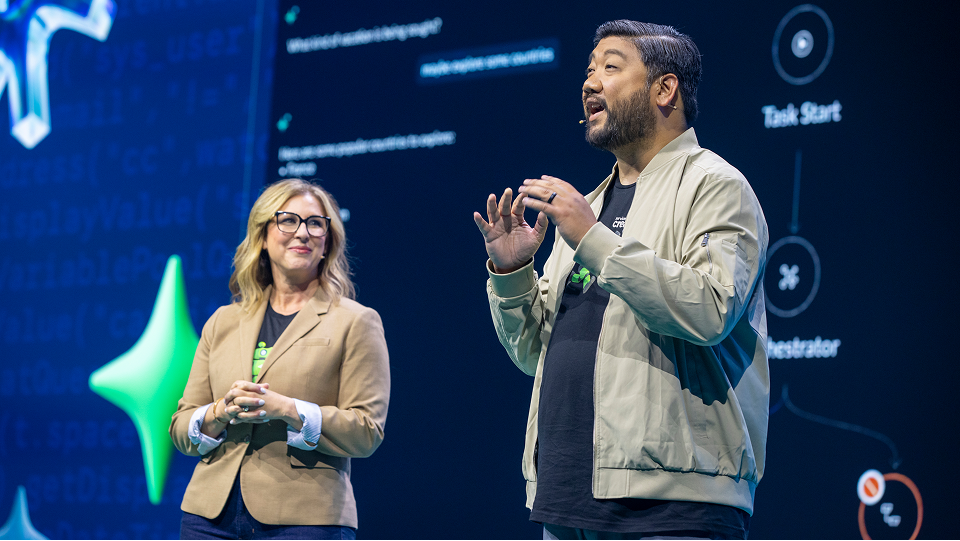
ServiceNow used its Knowledge 2026 conference to declare that the era of AI as a helper is over—the era of AI as a worker has begun. The company unveiled a suite of AI “specialists” that complete entire business processes autonomously across IT, CRM, HR, finance, legal, procurement, and security. Early results are striking: ServiceNow’s internal AI resolved IT service desk cases 99% faster than human agents, Docusign targets 90% autonomous resolution of IT tickets, and Raleigh, NC reports a 98% deflection rate on employee requests. ServiceNow also expanded its AI Control Tower governance across all products and deepened its Microsoft partnership for cross-platform agent oversight.
Anthropic’s Project Glasswing Deploys Claude Mythos for Cybersecurity
Anthropic launched Project Glasswing, a landmark cybersecurity initiative powered by its unreleased frontier model, Claude Mythos Preview. The model has identified thousands of zero-day vulnerabilities in every major operating system and web browser, including a 27-year-old flaw in OpenBSD and a 16-year-old bug in FFmpeg that survived five million automated tests. The initiative brings together AWS, Apple, Cisco, CrowdStrike, Google, JPMorganChase, Microsoft, NVIDIA, and others as launch partners. Anthropic is committing $100 million in usage credits and $4 million to open-source security organizations. Claude Mythos Preview will not be made generally available, but its capabilities signal that AI-driven cybersecurity has crossed a critical threshold.
AI Is Reshaping Jobs, Not Replacing Them Wholesale

AI was cited as the top reason for job cuts in April for the second consecutive month, according to Challenger, Gray & Christmas, with more than 49,000 AI-linked cuts so far this year. But CNN reports the reality is more nuanced: companies are automating parts of jobs rather than eliminating entire roles. McKinsey research suggests AI can technically automate 57% of work-related activities, but those percentages are spread across fragments of many different positions. Cloudflare reported a 600% increase in AI usage in the last three months, while Block laid off 40% of its staff and Coinbase cut 14% as AI enables smaller teams to ship faster. The shift is redefining what it means to be a software engineer—Anthropic’s head of Claude Code predicts the job title itself may give way to “builder.”
The Big Picture
This week’s headlines paint a consistent picture: AI is moving from experimental to operational at breakneck speed. Nvidia is financing the entire AI supply chain. OpenAI is making smarter models the default experience for hundreds of millions of users. IBM and ServiceNow are rewriting the enterprise playbook around autonomous agents. Anthropic is turning frontier model capabilities toward defending the world’s critical software infrastructure. And the labor market is recalibrating in real time, not with wholesale replacement but with a fundamental restructuring of how work gets done. The question is no longer whether AI will reshape industries—it’s how fast organizations can adapt before the gap between leaders and laggards becomes permanent.
Sources
- CNBC – Nvidia embraces AI investor, topping $40 billion in equity bets
- TechCrunch – Nvidia has already committed $40B to equity AI deals this year
- OpenAI – GPT-5.5 Instant: smarter, clearer, and more personalized
- TechCrunch – OpenAI releases GPT-5.5 Instant, a new default model for ChatGPT
- IBM Newsroom – Think 2026: IBM Delivers the Blueprint for the AI Operating Model
- Fortune – ServiceNow just unveiled an AI workforce that can run your entire company
- Anthropic – Project Glasswing: Securing critical software for the AI era
- CNN – AI isn’t actually ‘taking’ your job. Here’s what’s happening instead
- Cloudflare – Building for the Future





Responses