
May 15, 2026 – AI Daily Recap

From a high-stakes superpower summit in Beijing to dueling cybersecurity moonshots from Anthropic and OpenAI, today’s AI landscape is moving fast across geopolitics, infrastructure, and consumer products. Here’s what matters most.
U.S. and China Agree to Launch AI Safety Talks After Trump-Xi Summit
Treasury Secretary Scott Bessent announced on Wednesday that the United States and China will establish a formal protocol for artificial intelligence safety following meetings between President Trump and Chinese leader Xi Jinping in Beijing. Bessent described the two nations as the world’s “two AI superpowers” and said both delegations are preparing a framework on AI best practices aimed at preventing advanced models from falling into the wrong hands. Nvidia CEO Jensen Huang joined Trump’s delegation as a late addition, underscoring the semiconductor dimension of the talks. The summit also addressed broader trade and security issues, with AI and chip policy emerging as central agenda items.
Google Unveils Gemini Intelligence for Android
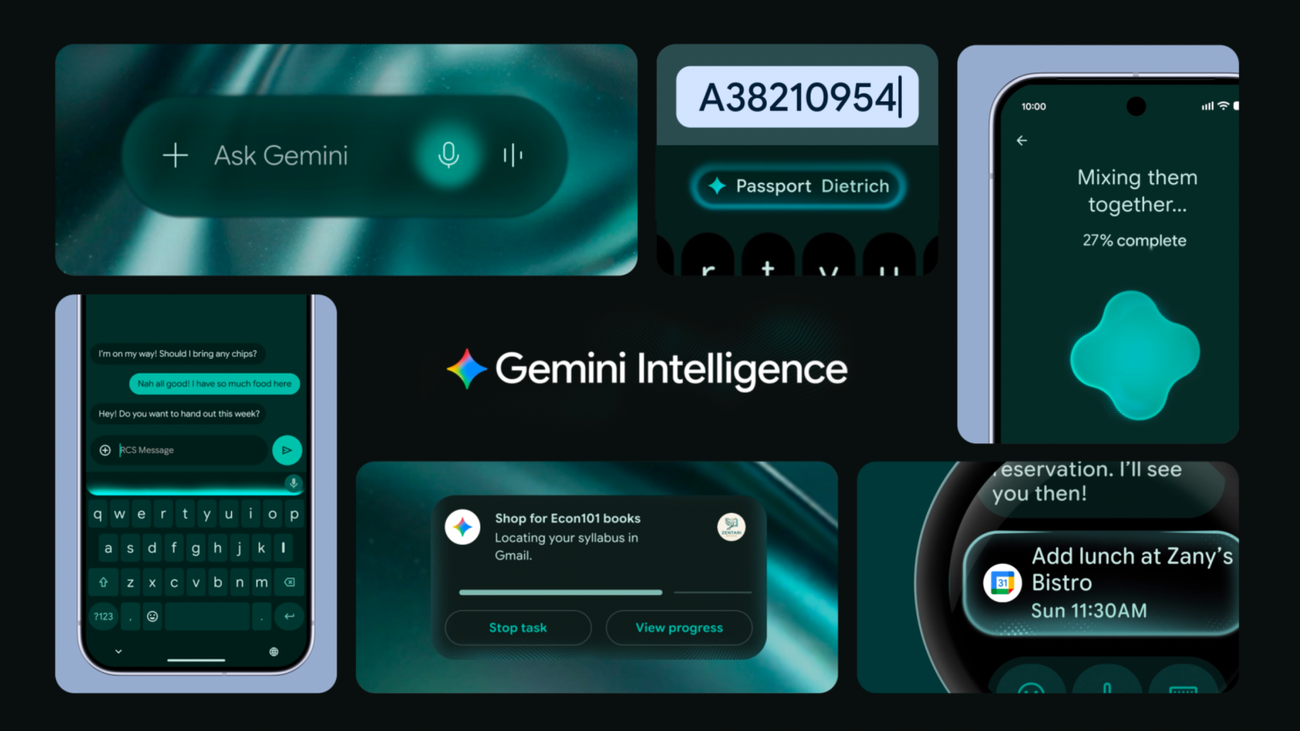
At The Android Show 2026, Google introduced Gemini Intelligence, an agentic AI layer that transforms Android from an operating system into what the company calls an intelligence system. The upgrade enables multi-step task automation across apps, allowing users to book fitness classes, build grocery delivery orders from a notes app, or find travel packages from a photo — all hands-free. New features include Rambler, which turns natural speech into polished text messages across multiple languages, and Create My Widget, which generates custom home screen widgets from natural language descriptions. Google also announced intelligent autofill powered by Personal Intelligence that can complete complex forms across apps. Rollout begins this summer on Samsung Galaxy and Google Pixel devices before expanding to watches, cars, glasses, and laptops later this year.
Anthropic’s Project Glasswing Deploys Claude Mythos to Find Thousands of Zero-Day Vulnerabilities
Anthropic launched Project Glasswing, assembling a coalition of AWS, Apple, Cisco, CrowdStrike, Google, JPMorganChase, the Linux Foundation, Microsoft, NVIDIA, and Palo Alto Networks to secure the world’s most critical software using Claude Mythos Preview, a frontier model with unprecedented cybersecurity capabilities. In weeks of internal testing, the model autonomously discovered thousands of zero-day vulnerabilities, including a 27-year-old flaw in OpenBSD and a 16-year-old bug in FFmpeg that had survived five million automated tests. Anthropic is committing up to $100 million in usage credits and $4 million in donations to open-source security organizations. The model will not be made generally available, but Anthropic plans to develop safeguards that could enable Mythos-class capabilities in future Claude Opus releases.
OpenAI Launches Daybreak Cybersecurity Platform
Not to be outdone on cybersecurity, OpenAI launched Daybreak, a new initiative pairing frontier AI with its Codex Security platform to help organizations find and fix vulnerabilities. The system is powered by three tiers of GPT-5.5: a standard version, one with Trusted Access for Cyber for verified defensive work, and GPT-5.5-Cyber for red teaming and penetration testing. Companies including Akamai, Cisco, Cloudflare, CrowdStrike, Fortinet, Oracle, Palo Alto Networks, and Zscaler are already onboard. The launch highlights a growing consensus that AI-powered security tools are becoming essential as models compress the window between vulnerability discovery and exploitation.
Amazon Kills Rufus, Launches Alexa for Shopping
Amazon is discontinuing its Rufus chatbot and replacing it with Alexa for Shopping, a new AI assistant powered by Alexa+ that merges product discovery with autonomous purchasing. Unlike Rufus, which focused solely on recommendations, the new assistant can complete purchases on third-party retail sites via a Buy for Me feature. The tool draws on user history and connected data to act as a personalized shopping agent across the Amazon app, website, and Echo Show devices. Over 300 million customers used Rufus in 2025, and Amazon is rolling out the new assistant to all U.S. customers within the next week — free of charge, no Prime required.
Meta Expands Muse Spark Across Its App Ecosystem
Meta is rolling out Muse Spark, the first model from Meta Superintelligence Labs, across WhatsApp, Instagram, Facebook, Messenger, and Ray-Ban Meta smart glasses. The model represents a strategic pivot: unlike Meta’s open-source Llama series, Muse Spark is proprietary, built from the ground up over nine months with a focus on being small, fast, and capable at reasoning through complex questions in science, math, and health. The expansion comes alongside Meta’s staggering $115–135 billion AI capital expenditure plan for 2026, nearly double last year’s spending, funded almost entirely from ad revenue. Wall Street has shown mixed reactions, with Meta stock dropping 10% after the capex announcement despite enthusiasm for the model’s capabilities.
The Big Picture
Today’s developments reveal two dominant themes shaping AI in mid-2026. First, cybersecurity has become the new frontier battleground, with both Anthropic and OpenAI deploying frontier models as defensive weapons in a race to secure critical infrastructure before attackers gain similar capabilities. Second, the consumer AI race is intensifying as Google, Amazon, and Meta all push to embed AI agents deeper into daily life — from your Android home screen to your shopping cart to your smart glasses. Meanwhile, the U.S.-China summit signals that governments are finally grappling with the geopolitical implications of AI dominance, setting the stage for the first formal guardrails between the world’s two AI superpowers.
Sources
- CNBC – U.S. China AI Talks: Bessent Says U.S. Leads
- Google Blog – Gemini Intelligence Brings Proactive AI to Android
- Anthropic – Project Glasswing: Securing Critical Software for the AI Era
- Anthropic Red Team – Claude Mythos Preview
- OpenAI – Daybreak
- The Hacker News – OpenAI Launches Daybreak
- CNBC – Amazon Ditches Rufus for Alexa Shopping Agent
- TechCrunch – Amazon Launches AI Shopping Assistant
- Meta – Introducing Muse Spark
- CNBC – Meta Muse Spark Has Promise
- Yahoo Finance – US, China Discussing AI Guardrails




Responses