May 27, 2026 – AI Daily Recap
The AI race just got a new leader — at least on paper. As Anthropic prepares to close a record-shattering funding round that would make it the world’s most valuable private AI company, the Vatican weighed in with its first papal encyclical on artificial intelligence, and the largest utility merger in U.S. history is driven entirely by data center power demand. Here’s what happened.
Anthropic Set to Close $30 Billion Round at $900 Billion-Plus Valuation
Anthropic is on the verge of closing a funding round exceeding $30 billion at a pre-money valuation above $900 billion, according to Bloomberg. If the deal closes as expected this week, the Claude maker would surpass OpenAI’s $852 billion March valuation to become the world’s most valuable private AI company. Sequoia Capital, Dragoneer Investment Group, Altimeter Capital, and Greenoaks Capital Partners are each expected to contribute roughly $2 billion as co-leads. The round comes as Anthropic projected $10.9 billion in Q2 revenue — more than double its Q1 figure — and its first quarterly operating profit ever. The timing is notable: OpenAI filed its own confidential IPO prospectus with the SEC on the same day, setting up a head-to-head race to public markets before year’s end.
Pope Leo XIV Releases First Encyclical on AI, Joined by Anthropic Co-Founder
In a historic moment at the intersection of faith and technology, Pope Leo XIV presented his first encyclical, titled Magnifica Humanitas, on May 25. The 42,300-word document centers on safeguarding the human person in the age of artificial intelligence and urges governments, corporations, and individuals to ensure AI remains subject to ethical and political oversight. Anthropic co-founder Christopher Olah spoke at the Vatican presentation, calling for informed critics outside the AI industry’s incentive structures. Pope Leo became the first pontiff to personally present an encyclical to the world, in a signal of how seriously the Church is taking AI’s implications for human dignity and labor.
NextEra’s $67 Billion Dominion Takeover Creates World’s Largest Utility
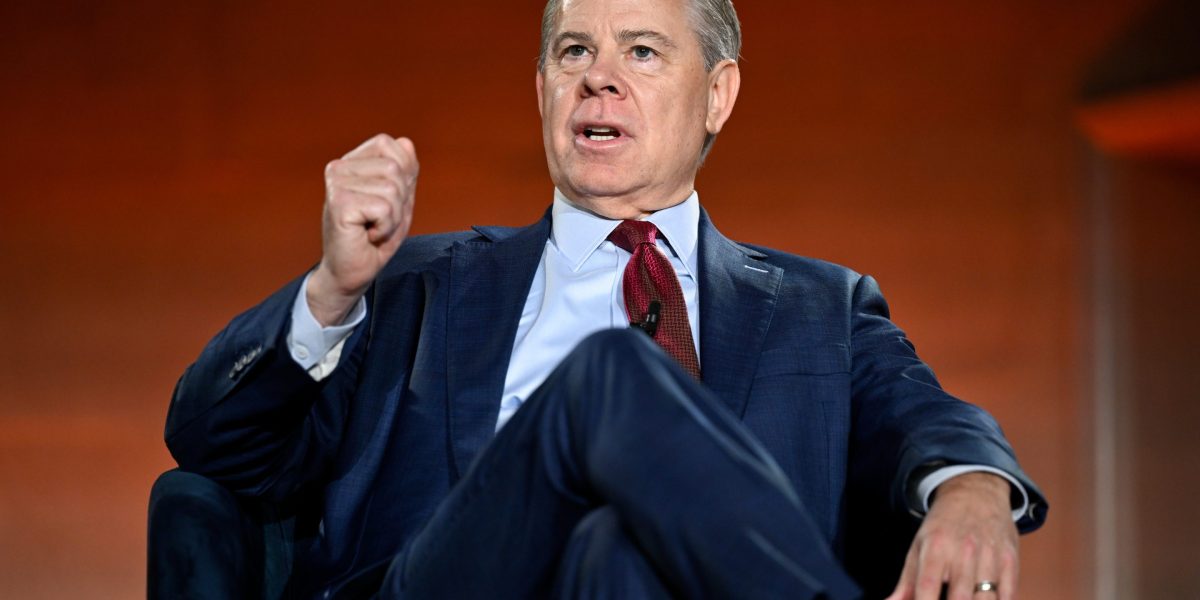
NextEra Energy announced a $67 billion all-stock deal to acquire Dominion Energy — the largest utility merger in U.S. history and the biggest energy acquisition this century. The combined company will become the world’s largest regulated utility, serving roughly 10 million customer accounts with 110 gigawatts of generation capacity and a 130-gigawatt large-load pipeline. The strategic rationale is squarely about AI: Dominion powers the world’s largest data center market in northern Virginia, and NextEra CEO John Ketchum framed the deal as essential to meeting hyperscale AI power demand that is growing unlike anything seen in generations.
OpenAI Codex Can Now Control Your Mac — Even When It’s Locked
OpenAI shipped a significant update to its Codex desktop app on macOS: users can now send tasks from their phone and have Codex operate apps on their Mac even when the screen is off and locked. The feature uses an Apple authorization plug-in with temporal and behavioral safeguards, letting developers trigger long-running agent tasks remotely. Codex can click through windows, type, navigate menus, and interact with the clipboard in explicitly allowed apps. The feature is unavailable in the EEA, UK, and Switzerland at launch, and cannot automate Terminal apps or system-level admin prompts. It represents a meaningful leap from AI assistants that require constant human presence toward autonomous background agents.
Apple Reportedly Opening Apple Intelligence to Third-Party AI Providers in iOS 27

Apple is preparing a major AI platform shift for iOS 27, iPadOS 27, and macOS 27 that would let users select third-party AI providers to power Apple Intelligence features. Internally called “Extensions,” the system would allow providers like Google and Anthropic to integrate through their existing App Store apps, letting users route Siri queries, writing tasks, and image generation through Gemini, Claude, or other models. Siri would use different voices depending on which model is responding — a small but transparent signal to users. The features are expected to be previewed at WWDC in June with a fall release.
Chinese AI Models Now Account for 61% of Global API Traffic on OpenRouter
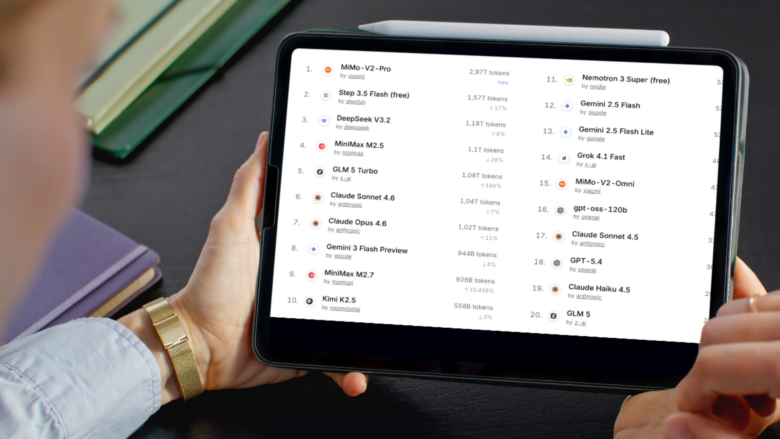
The open-weights AI tier is now Chinese-led. According to OpenRouter data, Chinese models account for roughly 61 percent of total token consumption among the platform’s most-used models. MiniMax M2.5 claimed the top spot with 2.45 trillion tokens consumed in a single week, followed by Moonshot AI’s Kimi K2.5 and Zhipu AI’s GLM-5. The driving factor is price: Chinese models are 10 to 20 times cheaper than leading American alternatives, a gap that compounds dramatically with the rise of AI agents that consume millions of tokens per task. Venture capitalist Martin Casado of Andreessen Horowitz estimates that around 80 percent of young AI companies using open-source stacks now rely on Chinese models.
The Big Picture
Today’s headlines paint a picture of an AI industry entering a new phase of consolidation and real-world integration. The sheer scale of capital flowing into frontier labs — $30 billion rounds, $67 billion utility mergers, $115 billion capex commitments — makes clear that the infrastructure buildout is no longer speculative. It’s an industrial mobilization. Meanwhile, the Vatican’s encyclical and Apple’s platform shift both point to a growing recognition that AI is no longer a niche technology concern but a civilizational question touching faith, consumer choice, and the global balance of power. The rise of Chinese models on OpenRouter underscores that the U.S. does not have a monopoly on AI capability, especially at the price-sensitive API layer where most real-world applications are being built. The next chapter of the AI race will be fought not just in research labs but in power plants, papal halls, and the settings menus of a billion iPhones.
Sources
- Anthropic Funding Round to Top $30B — Tech Times
- Anthropic In Talks to Raise $30 Billion — Yahoo Finance / Bloomberg
- Pope Leo XIV’s First Encyclical Magnifica Humanitas — Vatican News
- Chris Olah’s Remarks on the Encyclical — Anthropic
- NextEra’s $67 Billion Dominion Takeover — Fortune
- NextEra to Buy Dominion in Data Center AI Deal — CNBC
- OpenAI’s Codex Can Now Use Your Mac When Locked — MacRumors
- Codex Computer Use Documentation — OpenAI
- iOS 27 Third-Party AI Models — 9to5Mac
- Chinese AI Models Overtake US Rivals — Trending Topics
- Chinese AI Models Hit 61% Market Share on OpenRouter — Dataconomy

Responses