
AI News Week #14


Week 14 of 2026 wasn’t just a busy week in AI — it was the kind of week that will get its own chapter in whatever retrospective someone eventually writes about this era. OpenAI buried Sora while pocketing $122 billion. Anthropic accidentally published its own source code to npm. Jensen Huang told Lex Fridman we’ve already achieved AGI. A supply chain attack compromised potentially 500,000 machines via a popular open-source library. And somewhere in there, Google quietly dropped a model that costs one-eighth of a cent per thousand tokens.
Seven days. Thirty-something major stories. Let’s make sense of it.
The AGI Declaration Nobody Asked For (And Everybody Is Arguing About)

Jensen Huang kicked off the week by saying the quiet part loud. During a conversation with Lex Fridman, NVIDIA’s CEO declared that “we’ve achieved AGI,” pointing to AI systems now capable of spinning up billion-dollar web services from scratch. The statement landed like a grenade in a very crowded room.
The problem, of course, is definitional. Huang’s version of AGI seems to mean “AI that can do economically valuable knowledge work at scale,” which is a reasonable framing — but it’s also a fairly convenient one for the world’s most valuable chipmaker to land on. If AGI is already here, then the compute buildout isn’t speculative anymore; it’s infrastructure for an established reality. That’s a much easier sell to institutional investors than “we’re still racing toward a threshold we can’t precisely define.”
The timing is interesting too, because by Friday, we learned that GPT-5.5 — internally codenamed “Spud” — completed pre-training on March 24 and is weeks away from release. Greg Brockman described it as containing “two years of research baked into the architecture,” and early positioning suggests it’s designed specifically to challenge Gemini 3.1 Pro, which currently leads 13 of 16 major benchmarks. Then there’s Claude Mythos (internal codename: Capybara), Anthropic’s above-Opus model that got accidentally exposed twice this week, which by all leaked accounts represents what Anthropic itself calls “a step change” in capability. DeepSeek V4, with its one-trillion-parameter Mixture-of-Experts architecture, is also hovering just offstage.
In other words: if we’ve “achieved AGI,” we’re about to achieve it several more times in the next sixty days. The frontier is moving so fast that the question of whether any given model clears the bar becomes almost secondary to the velocity of the race itself.
Anthropic’s Extremely Bad, Accidentally Transparent Week

Anthropic, the company that has built its entire brand identity around safety and careful, deliberate development, managed to accidentally leak itself twice in the span of five days. If it weren’t so consequential, it would be almost funny.
First, on March 27, a misconfigured CMS exposed nearly 3,000 internal files, including drafts referencing Claude Mythos — a model above the current Opus tier that Anthropic hadn’t announced. Researchers at LayerX Security and Cambridge found it. That was embarrassing enough. Then, on March 31, a packaging error in Claude Code v2.1.88 shipped the entire source code of Claude Code to the public npm registry. We’re talking a 57MB source map, 1,906 TypeScript files, and 512,000 lines of unobfuscated code. Security researcher Chaofan Shou posted about it on X; the tweet got 16 million views. Within two hours, GitHub repositories had appeared, with the fastest copy racing to 50,000 stars and 41,500 forks before the week was out.
What the leaked code revealed was genuinely interesting: unreleased features including a persistent background assistant mode, session-review learning, and remote device control capabilities. Anthropic’s official line was “human error in release packaging, no customer data compromised,” which is technically the best-case framing — and probably accurate — but does little to address the underlying question about operational discipline at an organization that positions itself as the safety-conscious alternative in frontier AI. Briefing U.S. officials about Claude Mythos’s vulnerability-exploitation capabilities while simultaneously leaking its own source code is a tough optics combination.
The charitable read is that even well-run organizations have accidents, and Anthropic’s transparency about both incidents — while involuntary — at least demonstrates they’re building interesting things. The less charitable read is that there’s a meaningful gap between Anthropic’s public positioning and its internal execution maturity. Both reads can be true at once.
OpenAI: $122 Billion Richer, One Product Shorter
OpenAI closed the largest private funding round in history this week: $122 billion at an $852 billion valuation. Amazon put in $50 billion. NVIDIA and SoftBank each committed $30 billion. Microsoft participated without disclosing its amount. Perhaps most tellingly, $3 billion of the round was specifically allocated to retail investors — a clear signal that the company is actively preparing for an IPO. With annualized revenue exceeding $25 billion and approaching one billion weekly active users, OpenAI has transformed from a non-profit research lab into something that looks increasingly like a publicly traded infrastructure company.
The same week, OpenAI killed Sora.
The video generation product was burning roughly $1 million per day while user engagement had collapsed from a peak of one million to fewer than 500,000. The Sora web app shuts down April 26; the API follows September 24. The most uncomfortable detail: Disney, which had committed $1 billion to a partnership, allegedly learned about the shutdown less than an hour before the public announcement. That partnership is now dead.
There’s a version of this story where Sora’s death is simply rational capital allocation — a $25 billion annual revenue business cutting a money-losing product that wasn’t working to redirect compute toward coding tools and enterprise customers. That’s genuinely defensible. But there’s also a version where it reveals something about how OpenAI manages relationships, and how the pressure to perform at $852 billion valuation will increasingly mean ruthless prioritization over experimental patience. Disney will remember the one-hour notice. Other potential partners are watching.
Infrastructure at Nation-State Scale
If there’s one thread connecting every story this week, it’s infrastructure. The AI industry is in a full sprint to build the physical substrate that future capabilities will run on, and the deals being announced have a different character than typical tech investment — they read more like geopolitical positioning.
Arm shipped its first in-house chip in 35 years: the AGI CPU, a 136-core, 3-nanometer data center processor built explicitly for AI inference. Meta is the launch customer; OpenAI, Cloudflare, and SAP are among seven additional committed buyers. CEO Rene Haas projected $15 billion in revenue from the chip line by 2031. Up to 64 of these can fit in a single air-cooled rack — roughly 8,700 cores per rack. Arm stock jumped 16%.
NVIDIA made a $2 billion strategic investment in Marvell Technology and opened NVLink Fusion to integrate Marvell’s semi-custom AI accelerators into NVIDIA’s interconnect fabric. The two companies will collaborate on silicon photonics and AI-RAN for 5G/6G networks. Marvell surged 11%.
Oracle announced it would cut between 20,000 and 30,000 employees from its 162,000-person workforce — not because the business is struggling, but to redirect capital toward AI data center infrastructure. TD Cowen estimates the cuts could unlock $8-10 billion in additional free cash flow. Oracle’s customers for that new compute include NVIDIA, Meta, OpenAI, AMD, and xAI.
Microsoft pledged $10 billion toward Japan’s AI ecosystem through 2029, partnering with SoftBank and Sakura Internet (whose shares promptly surged 20%). France’s Mistral raised $830 million in debt from a seven-bank consortium to build a Paris-area data center housing 13,800 NVIDIA GB300 GPUs. And Elon Musk merged SpaceX with xAI — because terrestrial power and cooling constraints are apparently a bottleneck, and the answer is orbital solar-powered data centers. That sentence is real.
China Is Not Waiting
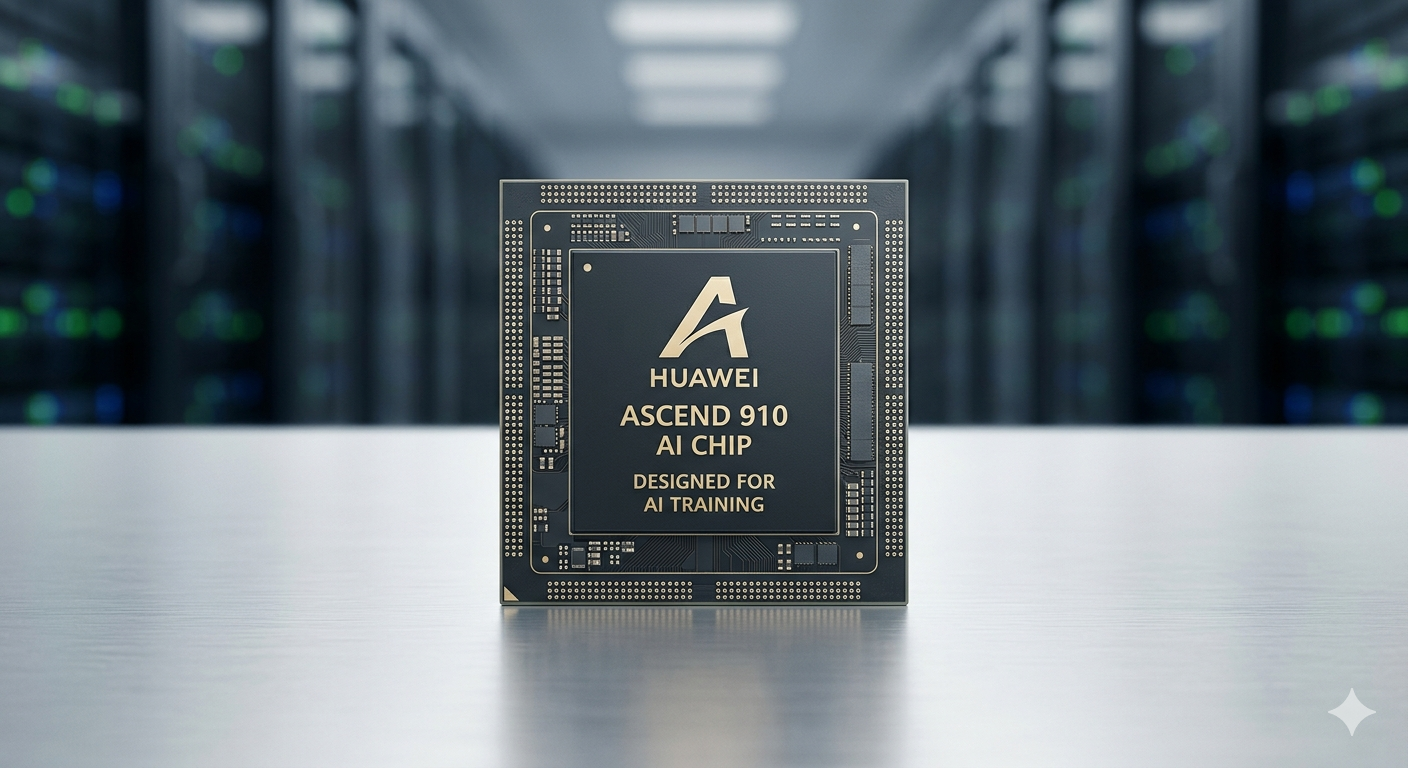
Three stories this week, read together, paint a picture of China’s AI ecosystem that U.S. export control advocates may find uncomfortable. Huawei’s 950PR AI chip cleared customer testing and secured large orders from ByteDance and Alibaba. The standard version costs roughly $6,900; the HBM premium variant runs $9,600. Mass production begins immediately, with full-scale shipments in H2 2026, targeting 750,000 units annually. Critically: the 950PR now offers improved compatibility with NVIDIA’s CUDA software ecosystem, which has long been the stickiest moat in AI hardware. If CUDA compatibility becomes table stakes for Chinese domestic chips, the switching costs that have kept developers locked into NVIDIA’s stack start to erode.
Alibaba dropped Qwen 3.6-Plus with a one-million-token context window and claims it matches Claude Opus 4.5 on SWE-bench benchmarks — at $0.29 per million input tokens. DeepSeek V4, with one trillion parameters and a native multimodal architecture optimized for Huawei’s Ascend processors, is approaching official release.
Then there’s AGIBOT, which reached its 10,000th humanoid robot shipped — and the production acceleration is what stands out: the first 1,000 units took nearly two years to build; the jump from 5,000 to 10,000 took three months. That’s a 4x increase in production velocity. AGIBOT ranked first globally in humanoid shipments in 2025.
The official U.S. strategy has been to limit China’s access to frontier hardware. The 950PR’s CUDA compatibility and Huawei’s production volumes suggest that strategy is producing adaptation rather than stagnation.
The Supply Chain Attack That Should Alarm Everyone

The most underreported story of the week — and potentially the most consequential — was the LiteLLM supply chain attack. Here’s what happened: on March 27, a hacking collective called TeamPCP compromised LiteLLM maintainer credentials and pushed malicious versions (1.82.7 and 1.82.8) to PyPI. LiteLLM is an open-source API gateway that thousands of organizations use to route calls to OpenAI, Anthropic, Meta, and other model providers. The malicious packages were live for approximately 40 minutes. In those 40 minutes, the malware harvested SSH keys, environment variables, cloud credentials, and AI API keys from affected systems.
By end of week, estimates suggested up to 500,000 machines and 1,000 SaaS environments were potentially affected. AI recruiting platform Mercor — a $10 billion data supplier that counts Meta and OpenAI among its customers — took the most public hit: 939 GB of source code, a 211 GB user database, and three terabytes of video interviews and identity documents were exposed. Meta suspended its Mercor partnership. OpenAI launched an investigation. Over 40,000 individuals filed class action lawsuits. Lapsus$ claimed four terabytes of total data including internal Slack conversations.
The deeper issue here isn’t specific to Mercor or LiteLLM — it’s structural. The modern AI stack is built on a dense web of open-source dependencies, and those dependencies inherit the security posture of their maintainers. LiteLLM downloads millions of packages daily. One compromised maintainer account equals one 40-minute window to poison a significant fraction of the AI development ecosystem’s infrastructure. The industry has spent enormous energy thinking about model safety and almost no energy thinking about supply chain hygiene. This week was an expensive reminder.
Regulation Finally Has Enough to Work With
For anyone tracking the AI governance landscape, this week felt like a gear shift. The Transparency Coalition’s April 3 update counted 78 active chatbot-related bills across 27 U.S. states, just six weeks into the 2026 legislative session. Washington Governor Bob Ferguson signed two AI bills: HB 2225 targeting chatbot safety and HB 1170 addressing AI content provenance. Tennessee unanimously passed SB 1580, which prohibits AI systems from “representing itself as a qualified mental health professional.” Georgia was approaching its session deadline with three AI bills on the governor’s desk, including a chatbot disclosure and child safety measure. Idaho had already enacted four AI-related laws.
The federal picture is more complicated. The White House’s National Policy Framework for Artificial Intelligence, released March 20, explicitly opposes creating a new federal AI rulemaking body, favoring sector-specific oversight through existing agencies. It also recommends federal preemption of state-level AI laws — which puts Washington DC on a potential collision course with the 27 states currently advancing their own frameworks. Meanwhile, the EU Council agreed to streamline AI Act compliance rules, and the EU passed new anti-circumvention provisions.
What’s clear is that the regulatory vacuum that characterized 2023 and 2024 is closing fast. The question is whether governance will converge on consistent, workable standards, or fragment into a patchwork that primarily advantages large incumbents who can afford compliance teams in 50 states.
The Part Where AI Actually Works
It’s easy to get lost in the drama of this week — the leaks, the shutdown, the breach, the merger — and miss the stories about AI doing what it’s supposed to do in the real world. A few are worth noting.
Macy’s “Ask Macy’s” chatbot, powered by Google Gemini, launched publicly on March 23. Early data: users spend 4.75 times more per visit than non-users. The assistant queries budget, occasion, and style preferences before surfacing curated recommendations with complete-the-look pairings and virtual try-on. Approximately 40% of the top 20 U.S. retailers now deploy AI shopping assistants. That ROI number — a 400% spending increase — is the kind of signal that turns AI from an interesting experiment into a board-level mandate.
Waymo doubled its weekly paid rides to 500,000, reaching the halfway point toward its annual target, and that milestone received roughly one-tenth the coverage of OpenAI’s Sora announcement. Harvey AI, the legal AI startup, closed a $200 million Series B at an $11 billion valuation — a 3.5x increase over roughly a year — serving more than 100,000 lawyers across 1,300 organizations. Eli Lilly committed $2.75 billion to Insilico Medicine for AI-driven drug discovery, with 28 AI-developed drugs already in Insilico’s pipeline and nearly half in clinical stages.
Google released Gemma 4, a family of open-source models under Apache 2.0 licensing, spanning from an effective 2B parameter model all the way to a 31B dense model that can run on a laptop GPU. And Gemini 3.1 Flash-Lite hit preview at $0.25 per million input tokens — one-eighth the cost of Gemini 3.1 Pro, with 2.5x faster time to first token. The race to the bottom on inference pricing isn’t a race to the bottom for the industry; it’s what makes everything else on this list economically possible.
The Week in Summary
Week 14 was the AI industry functioning at full throttle — simultaneously building, breaking, funding, leaking, regulating, and deploying at a scale that makes it genuinely difficult to form a coherent picture. The frontier is about to get markedly more capable in the next few weeks, with GPT-5.5, Claude Mythos, and DeepSeek V4 all expected imminently. The infrastructure bets being placed now are measured in tens of billions and years of lead time. The security vulnerabilities in the stack that serves all of this are very real and only beginning to get the attention they deserve.
If Jensen Huang is right that we’ve already crossed the AGI threshold, then everything happening this week is the beginning of what comes after that crossing. That’s either a reassuring thought or a terrifying one, depending on which part of this recap you found most memorable.
This week’s daily recaps:




Responses