
AI News Week #20


If Week 19 was a quiet pre-game show, Week 20 was the kickoff that nobody asked for and nobody can ignore. Between Monday and Sunday, a 26-year-old wafer-scale chip company turned an $185 IPO price into a near-$100 billion overnight valuation, Anthropic and OpenAI each unveiled cybersecurity programs that read more like military procurement announcements than product launches, Google quietly bet that the future of computing is a laptop class no one has ever heard of, and the President of the United States flew to Beijing to talk AI safety with Xi Jinping. Somewhere in the middle of all that, Anthropic appears to have overtaken OpenAI in the only enterprise metric that actually matters. Buckle up.
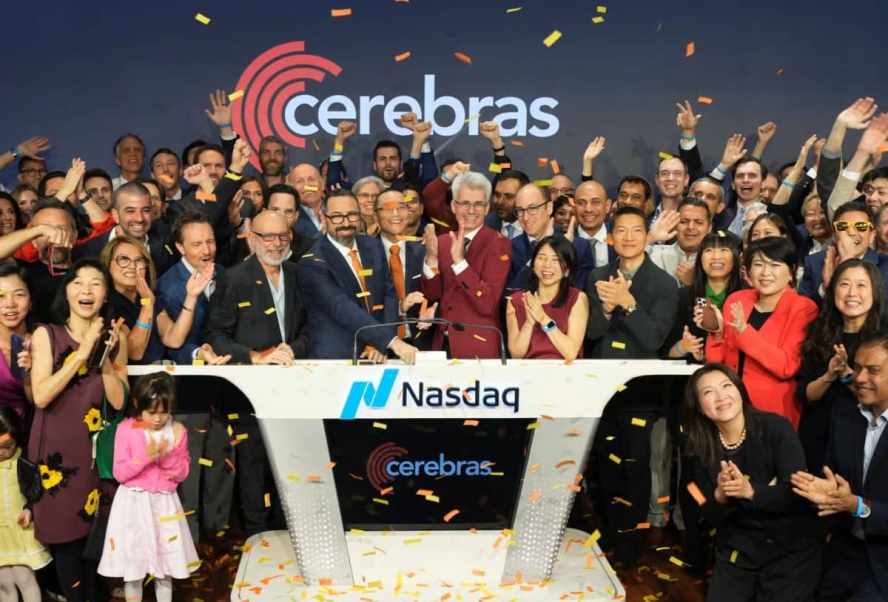
Cerebras Just Made Wall Street Care About Chips That Aren’t Nvidia
The number that should keep Jensen Huang up at night isn’t the 89% pop on Cerebras’ debut day. It’s the demand. The order book for Cerebras Systems’ Nasdaq listing was oversubscribed by more than 20x. Investors wanted twenty times the shares the company was willing to part with. Cerebras opened at $350 after pricing at $185, settled at $331, and raised $5.55 billion — the largest U.S. tech IPO since Uber, back when ride-hailing was the next big thing.
For seven years, Cerebras has been the company you only knew about if you went to certain conferences and listened to a certain kind of engineer talk about why you might want to use an entire silicon wafer as a single processor. Now it’s a $95 billion public company with OpenAI and Amazon as anchor customers, and the bet implicit in that valuation is brutally simple: the market believes there is room for an AI-chip story that isn’t Nvidia. That is — let’s be honest — the first time anyone has made that bet at scale in two years, and they made it with their wallets open.
The timing is poetic. Just last week, Nvidia confirmed it had committed more than $40 billion in AI equity investments in early 2026 alone — $30 billion into OpenAI, plus stakes in Corning, IREN, and roughly two dozen private startups. The strategy is to finance the entire supply chain so it runs on Nvidia hardware. Critics keep calling it a circular money problem. They’re not wrong. But circular or not, what Cerebras’ debut proved is that Wall Street is finally ready to underwrite the bet that the cycle won’t end with one company.
The Cybersecurity Arms Race Quietly Became the Story of the Decade
Here’s the headline that didn’t make enough headlines: this week, both Anthropic and OpenAI repurposed their frontier models as offensive cybersecurity weapons — and a real-world adversary used an unnamed LLM to weaponize a zero-day for the first time confirmed in the wild. Three news items, one inflection point. If you were going to mark the moment the AI cyber arms race went from theory to practice, this was it.
Start with Anthropic. Project Glasswing is the company’s most ambitious enterprise initiative to date, and it isn’t really an enterprise initiative — it’s a security pact. Glasswing pulls in AWS, Apple, Cisco, CrowdStrike, Google, JPMorganChase, the Linux Foundation, Microsoft, NVIDIA, and Palo Alto Networks, and puts Claude Mythos Preview — Anthropic’s as-yet-unreleased frontier model — to work on the world’s most critical open-source code. In weeks of internal testing, the model autonomously surfaced thousands of zero-day vulnerabilities, including a 27-year-old flaw in OpenBSD and a 16-year-old bug in FFmpeg that had survived five million automated tests. Five million. The bug was, in other words, undiscovered the entire time you’ve been using video on the internet. Anthropic is putting $100 million in usage credits and $4 million in donations behind the effort, and notably, Mythos itself will not be made generally available. The capability is judged too dangerous to ship.
OpenAI did not let that lie. Within forty-eight hours it launched Daybreak, an AI-cyber initiative built around its Codex Security platform and three tiers of GPT-5.5: a standard build, a Trusted Access version for verified defensive work, and a red-team-ready GPT-5.5-Cyber. Akamai, Cisco, Cloudflare, CrowdStrike, Fortinet, Oracle, Palo Alto Networks, and Zscaler are already on board. If you read the partner lists carefully, you’ll notice the overlap — Cisco, CrowdStrike, Palo Alto are on both. The implicit message: nobody is putting their eggs in one model basket when the stakes are this high.
And then there was the third item — the one that turns the other two into a story instead of a press release. Google’s Threat Intelligence Group reported the first confirmed real-world use of an LLM to discover and weaponize a zero-day. The flaw was in a Python script used to bypass two-factor authentication on an open-source web admin tool. Google says the attackers were planning a mass exploitation event, intercepted it, patched it, and called the disclosure the “tip of the iceberg.” Translation: this is happening more than you know, and the AI labs scrambling to deploy defensive frontier models aren’t doing it for theater. The Department of Defense, separately, has begun deploying Mythos to harden government code — a Pentagon cyber official told reporters that models like Mythos could fundamentally change warfare. Read that sentence twice.
The takeaway: cybersecurity is the first domain where frontier AI capability has visibly outrun ordinary product roadmaps. It’s the first place where the labs are admitting, explicitly, that some of what they’ve built is too dangerous to ship as a product. We’ve been told this might happen for two years. It just happened.
Google Just Reinvented the Laptop. Again.
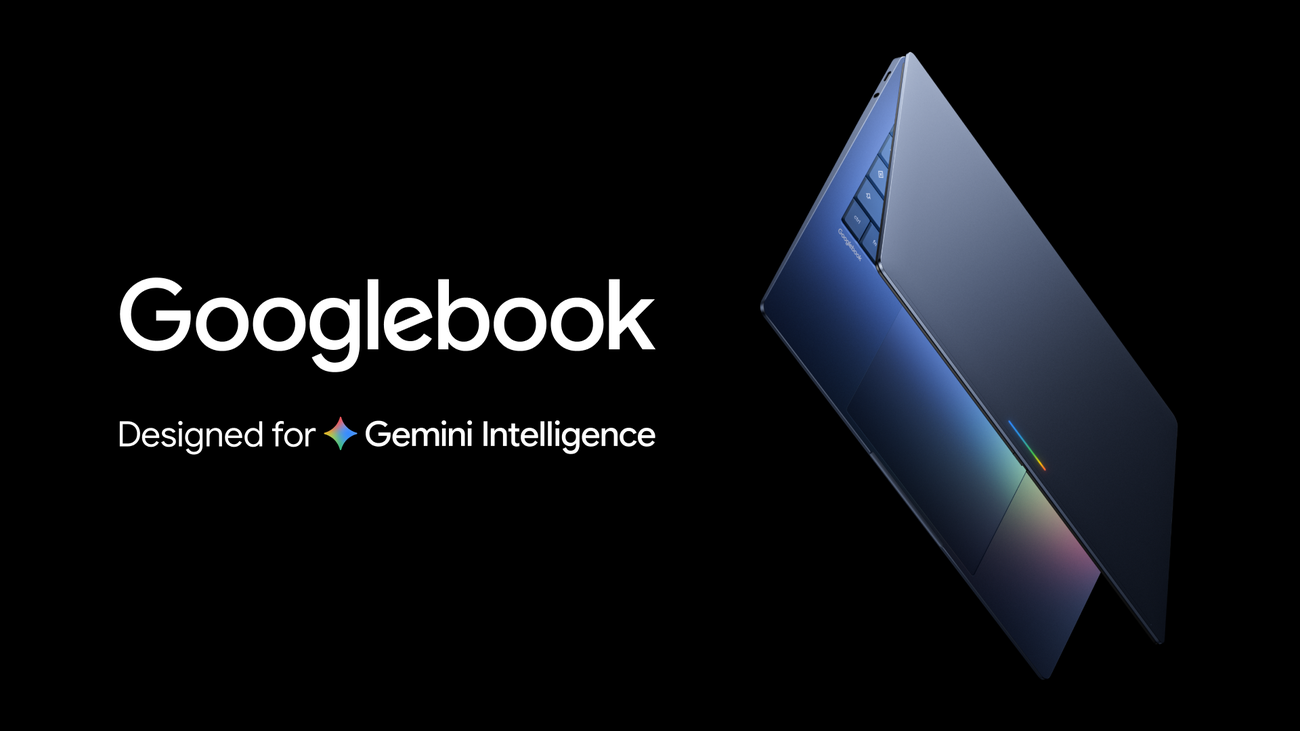
The Android Show on May 12 was technically a pre-I/O appetizer. It also happened to be the most consequential consumer-AI announcement of the year so far. Google unveiled the Googlebook, a new premium laptop category that fuses Android and ChromeOS and runs Gemini at every level of the stack. There’s a “Magic Pointer” that surfaces Gemini suggestions at the cursor. There’s a natural-language widget builder. Acer, ASUS, Dell, HP, and Lenovo are all building Googlebooks. They ship this fall.
Reading the announcement, it is impossible not to feel that Google is finally — finally — done playing nice with the Microsoft-Apple laptop duopoly and is doing what it should have done five years ago, which is build a real third option and tell the world it’s a third option. The new piece is Gemini Intelligence, an agentic layer that turns Android from an OS into what Google now insists on calling an “intelligence system.” The pitch is hands-free: book a fitness class, build a grocery order from a note, find a travel package from a photo, all via multi-step agents that cross apps. Rambler turns rambled speech into polished texts across languages. Create My Widget conjures home screen widgets from a sentence. Personal Intelligence autofills the kind of forms that have been silently ruining human afternoons for thirty years.
Rolling out this summer on Samsung Galaxy and Pixel before spreading to watches, cars, glasses, and laptops — and notice the order. Google is putting the OS on every surface and the surface is now a verb. Gemini Intelligence is the bet that for most people, the device class no longer matters. What matters is the agent that follows you across them.
Amazon Killed Rufus to Build a Shopping Agent That Actually Buys
If you didn’t hear about Amazon’s big AI move this week, it’s because Amazon doesn’t do keynote theater the way Google or Apple do. But the substance is just as big. Amazon killed Rufus, its chatbot, and replaced it with Alexa for Shopping — an Alexa+-powered agent that doesn’t just recommend products but actually buys them, on Amazon and via a “Buy for Me” feature that completes purchases on third-party sites. It’s rolling out to all U.S. customers within a week. No Prime required. Free.
What’s remarkable here isn’t the agent. We’ve seen a hundred shopping agents in the last eighteen months. What’s remarkable is that Amazon — the company whose entire business model depends on you arriving at their search bar — just shipped an agent that will walk you off their site and buy something somewhere else if it’s cheaper or better. Take a second with that. That is the kind of cannibalization a company only ships when it has decided that the alternative — sitting still while OpenAI Operator and Anthropic’s Cowork and Google’s Gemini Intelligence eat your distribution — is worse.
Over 300 million people used Rufus in 2025. They are about to be funneled into something more agentic, more autonomous, and frankly more useful. Whether they realize they are being conscripted into Amazon’s last-stand defense of the search bar is another question.
Meta Goes Proprietary, and Wall Street Is Suddenly Quieter About It
Meta also moved this week, expanding its first proprietary model, Muse Spark, across WhatsApp, Instagram, Facebook, Messenger, and the Ray-Ban Meta smart glasses. After years of Llama-flag-waving for open source, this is the strategic pivot — Muse Spark is closed, small, fast, and tuned for hard reasoning in science, math, and health. The model is the spearpoint of Meta’s $115–135 billion 2026 capex plan — roughly double last year — and the markets responded to that number by sending the stock down 10%.
The interesting thing is what happened next: the stock recovered, the model started shipping, and the conversation moved from “Zuckerberg is on a spending spree” to “Zuckerberg is one of three or four people who can actually afford a spending spree.” The Llama era told developers something about Meta’s posture. The Muse Spark era is telling shareholders something else.
Anthropic Quietly Took the Enterprise Crown — and OpenAI Just Spent $4 Billion to Take It Back
Of all the stories this week, this is the one I keep coming back to. According to corporate spend platform Ramp’s data, Anthropic has surpassed OpenAI in verified business-customer count. Read that as: in the place where revenue, retention, and seat counts actually live, Anthropic now leads. The narrative arc for the last two years has been “OpenAI is the consumer brand, Anthropic is the developer’s favorite.” That arc is now over. Anthropic is the enterprise leader, full stop, and on Monday it announced 20+ MCP connectors and 12 practice-area plugins aimed specifically at the legal profession — Ironclad, DocuSign, iManage, NetDocuments, Relativity, Everlaw, Thomson Reuters’ CoCounsel. Claude now operates inside Word, Outlook, Excel, and PowerPoint, carrying context across all four. Fortune reports lawyers are now the most engaged Claude Cowork users of any profession. That is one of the more surprising sentences I have written in a year. Lawyers — the constituency most allergic to LLM hallucinations — are the most engaged. Something has changed.
OpenAI noticed. Mid-week it announced the OpenAI Deployment Company (DeployCo), a $4 billion business unit backed by Brookfield, TPG, and 17 other partners. DeployCo embeds engineers directly inside Fortune 500s to wire up GPT-5.5 in their workflows. OpenAI also bought consulting firm Tomoro, acquiring 150 forward-deployed engineers. It is not subtle. This is OpenAI building a Palantir-style forward-deployed services arm because the model-as-API motion is no longer enough. If Anthropic has the enterprise relationships, OpenAI is going to throw consultants at them until they don’t. It worked for Palantir. It worked for Accenture. It may or may not work here. But the implicit acknowledgment is the story: OpenAI thinks the enterprise race is now a services game.
Anthropic, meanwhile, was busy with everything else, too — Claude for Small Business, a strategic alliance with PwC, a $200 million Gates Foundation partnership, briefings to the House Homeland Security Committee, and a DoD deployment of Mythos to harden government code. The company that two years ago was the cuddly “safety” lab is now the one with the deepest enterprise penetration, the deepest government relationships, and the model the Pentagon won’t let it ship publicly. That is, by any reasonable measure, the most dramatic corporate trajectory in tech this decade.
Trump in Beijing, Jensen in the Delegation
Tucked between the chip IPOs and the cyber announcements was a story that, in a less chaotic week, would have been the lead: the United States and China agreed to launch formal AI safety talks after meetings between President Trump and Xi Jinping. Treasury Secretary Scott Bessent described the two nations as the “two AI superpowers” — phrasing that should be noted, not skimmed past. Nvidia CEO Jensen Huang flew with the U.S. delegation as a late addition, which tells you everything about how chip policy and frontier policy are now welded together in U.S. statecraft.
The framework reportedly under discussion focuses on preventing advanced models from falling into the wrong hands. Separately, the Center for AI Standards and Innovation announced that Google DeepMind, Microsoft, and xAI have agreed to let the U.S. government evaluate their models before public release. The implications keep stacking: when the U.S. is co-evaluating Microsoft, Google, and xAI before release, and simultaneously sitting across from China to negotiate red lines, frontier AI has officially entered the same category of statecraft as ballistic missiles and reactor designs. We’re not pretending it’s a consumer product anymore.
Whether anything binding comes from the U.S.-China talks is another matter. Treaties on transformative technology are notoriously hard to write before the technology has stopped transforming. But the fact that the talks are happening, with Jensen in the room, is the news. Two years ago, it would have been impossible to imagine the CEO of a U.S. chip company sitting in a Beijing meeting as part of a presidential delegation on AI safety. This week, it happened.
The Human Bill: Samsung, Job Cuts, and the Quiet Restructuring of Work

For all the IPO confetti and frontier model fanfare, the real-world cost continued to come into focus. Samsung Electronics is staring down an 18-day strike from over 45,000 workers starting May 21, triggered by bonus disparities between its AI-boom-flush memory division (bonuses up to 607% of salary) and its struggling logic and foundry units (50–100%). The conflict is, in microcosm, the AI economy in miniature: the parts of the business touched by AI are gushing, the parts that aren’t are starved, and the workers in the starved divisions are not having it. Analysts warn the work stoppage could cost $14–21 billion in operating profit and ripple through the global AI chip supply chain at the worst possible moment.
Meanwhile in the U.S., Challenger, Gray & Christmas reported AI as the top cited reason for layoffs in April for the second month in a row, with more than 49,000 AI-linked cuts year-to-date. The CNN piece worth reading on this is the one that pushes past the headline: companies aren’t mostly eliminating whole roles, they’re carving up roles and automating the slices. McKinsey thinks 57% of work-related activities are technically automatable, but the percentages live as fragments scattered across many different positions. Cloudflare reported a 600% jump in AI usage over the last three months; Block laid off 40% of its staff and Coinbase cut 14%, both citing the leverage AI gives smaller teams. The Anthropic head of Claude Code has now openly predicted that “software engineer” as a job title is on its way out, to be replaced by “builder.” You can argue with the semantics. The numbers are harder to argue with.
The Rest of the Highlights
Even with the megastories accounted for, this was an absurdly dense week. Quick hits worth keeping in your peripheral vision:
Alphabet’s Isomorphic Labs closed a $2.1 billion Series B led by Thrive Capital, with Alphabet, GV, MGX, Temasek, CapitalG, and the U.K. Sovereign AI Fund participating. The Demis Hassabis-led drug discovery outfit has now raised roughly $2.6 billion total and is moving the AI Drug Design Engine toward clinical trials. AI-driven drug discovery is no longer a long-tail experiment — it is a venture category.
IBM had its Think 2026, unveiling watsonx Orchestrate as an agentic control plane, an agentic dev partner called IBM Bob, the IBM Concert platform for AI IT ops, and general availability of IBM Sovereign Core. Days later it launched Red Hat AI Inference and Red Hat OpenShift Virtualization Service on IBM Cloud, managed services targeting the gap between AI experimentation and production. Arvind Krishna’s line of the week: “Enterprises pulling ahead are redesigning how their business operates, not just deploying more AI.” That sentence belongs on a poster in every CIO’s office.
ServiceNow used Knowledge 2026 to announce that the era of AI as helper is over and the era of AI as worker has begun, complete with autonomous specialists for IT, CRM, HR, finance, legal, procurement, and security. Internal: 99% faster IT case resolution. Docusign target: 90% autonomous IT ticket resolution. Raleigh, NC: 98% deflection rate on employee requests. None of these are projections. These are reported in-production numbers.
OpenAI made GPT-5.5 Instant the new default ChatGPT model, with 52.5% fewer hallucinations on high-stakes medical, legal, and financial prompts, 30% shorter responses, and a feature for Plus/Pro users to pull context from past conversations, files, and Gmail. Quiet but consequential — and a reminder that the model-quality curve hasn’t flatlined, no matter how often pundits insist it has.
Robinhood filed for RVII, its second publicly traded venture fund, this one opening early-stage AI deal access to retail. RVI, the first vehicle, is up to $43.69, more than double its debut price, on the back of stakes in OpenAI, ElevenLabs, and Databricks. Whether you think this is genuine democratization or financial engineering depends on your priors. Either way, the AI investing pipe is being plumbed straight to retail.
And finally: the Musk v. OpenAI trial wrapped closing arguments in Oakland this week, with Musk seeking $150 billion for the OpenAI nonprofit arm plus the removal of Sam Altman and Greg Brockman. Microsoft testimony confirmed it has spent over $100 billion on OpenAI when infrastructure is included. The jury begins deliberations Monday. The outcome could redraw the line between mission-driven and investor-driven AI development — or it could be settled in seventy-two hours and disappear into a footnote. Either way, watch this space.
What This Week Actually Means
Step back from the noise and the week tells one story: AI is no longer a horizontal layer being grafted onto existing industries. It is becoming the infrastructure those industries run on, and the rules around it are being written in real time — in IPO order books, in cybersecurity coalitions, in Beijing summit rooms, and in Samsung union halls.
The leaders of this moment are placing radically different bets on what comes next. Nvidia is financing the whole supply chain. Cerebras just convinced the public market that the supply chain has room for more than one winner. Google is rebuilding consumer computing around an agentic OS. Amazon is willing to walk customers off its own platform to keep them inside Alexa. Meta has gone closed-source. Anthropic has quietly won the enterprise. OpenAI has spent $4 billion to try to win it back. The Pentagon is using Mythos to patch its code. The President of the United States is talking to Xi Jinping about model misuse. Lawyers — lawyers — are the most engaged Claude users on the planet.
You will hear plenty of takes in the coming days about how Week 20 was “just another big AI week.” They’re wrong. Week 20 was the week the AI era stopped pretending to be a product cycle and started behaving like an industrial revolution. The Cerebras IPO, the cyber arms race, the OS wars, the enterprise shakeout, the geopolitical talks, the Samsung strike — these are not separate stories. They are the same story, told in seven different rooms. The question for the next seven days is which of them ships another surprise.
If history rhymes, all of them will.
This Week’s Daily Recaps
- May 11, 2026 – AI Daily Recap — Nvidia’s $40B equity spree, GPT-5.5 Instant becomes the ChatGPT default, IBM and ServiceNow rewrite the enterprise playbook, and Project Glasswing arrives.
- May 13, 2026 – AI Daily Recap — Googlebook and Gemini Intelligence debut, Google flags the first AI-generated zero-day exploit in the wild, Isomorphic Labs lands $2.1B, and Anthropic floods legal tech with 20+ connectors and 12 plugins.
- May 15, 2026 – AI Daily Recap — Trump-Xi AI safety talks open in Beijing, Anthropic and OpenAI deploy frontier models as cybersecurity weapons, and Amazon kills Rufus for Alexa for Shopping.
- May 16, 2026 – AI Daily Recap — Cerebras shatters IPO records, the Musk v. OpenAI trial heads to the jury, Anthropic surpasses OpenAI in enterprise customers, and Samsung braces for an 18-day strike.


Responses