Gemini 3 Just Shipped a Weapon Called Antigravity

Google’s latest move isn’t subtle. While everyone was watching DeepSeek and debating Claude, they quietly released Gemini 3 with native multimodal reasoning and launched Antigravity—a development environment optimized for agentic AI that makes both Cursor and Claude Code look like yesterday’s tools.
What Antigravity Actually Does
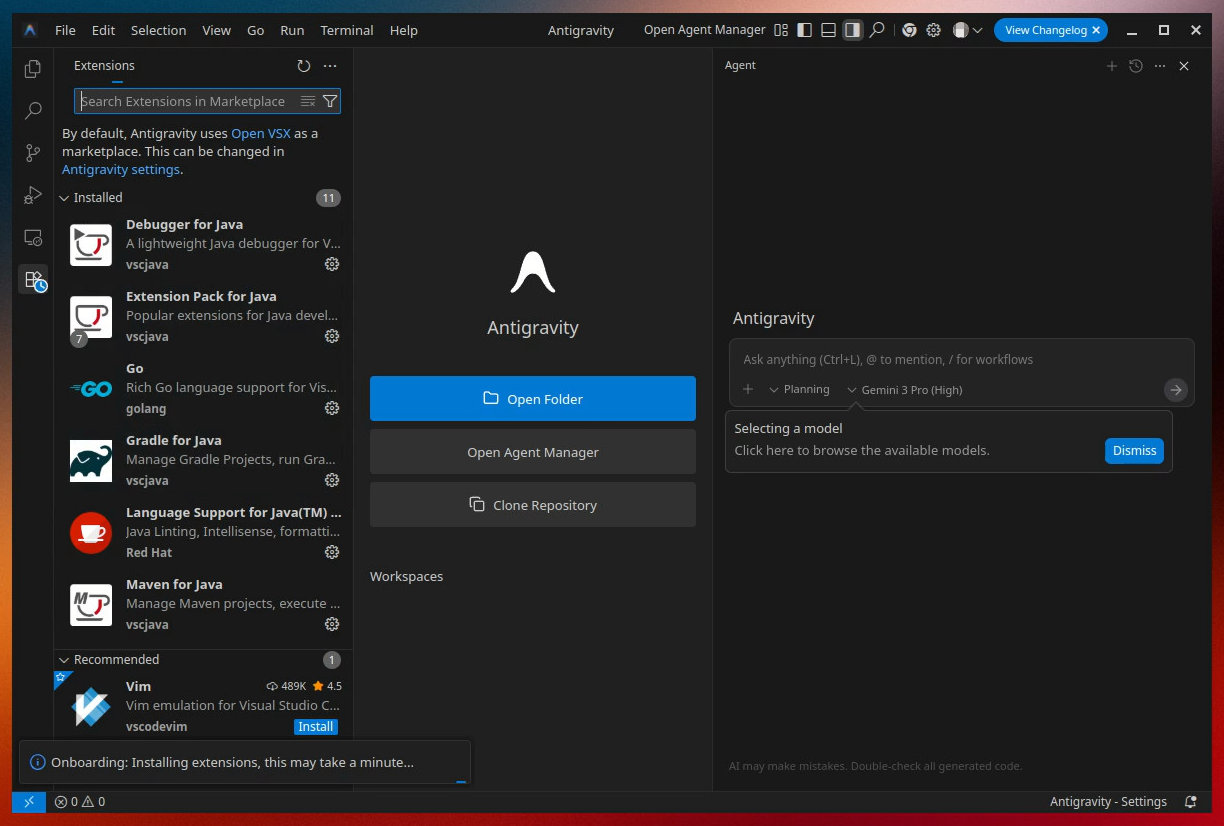
Antigravity is Google’s answer to the “vibe coding” era. It isn’t an IDE you bolt AI onto. It’s an IDE built from the ground up for agents to work autonomously within it.
Gemini 3 can ingest video, analyze code, synthesize documentation, and execute complex multi-step workflows in a single reasoning pass. Antigravity orchestrates this. You describe what you want built. Gemini 3 watches your codebase, reasons about the architecture, suggests designs, writes code, and tests it—all inside one continuous agentic loop.
The Multimodal Unlock
Here’s what makes this different from Claude Code. Gemini 3 processes text, images, audio, and video natively within the same model, not as post-processing tricks. Upload a design mockup and a video walkthrough of your desired UX. Gemini 3 understands both, reasons about consistency, and generates code that matches the visual intent.
The Timing Is Aggressive
Google released this specifically targeting developers doing “vibe coding”—their words, not mine. They’re positioning Antigravity as the environment where agentic reasoning, long-context understanding, and autonomous execution converge. The message is clear: stop thinking of AI as an assistant. Start thinking of it as a teammate that codes faster than you think.
Why This Matters Now
Cursor and Claude Code solve “how do I code faster.” Antigravity solves “how do I stop coding and let the agent handle it.” The difference isn’t incremental.
If Gemini 3 can maintain architectural coherence across entire projects, handle multimodal context (video specs, design systems, code docs, audio requirements all processed simultaneously), and execute autonomously, it reshapes the competitive landscape.
The catch: Antigravity is still in preview, and Gemini 3 Deep Think (the reasoning variant) is gated to safety testers. But the trajectory is unmistakable. January 2026 is when agentic development stops being theoretical and becomes a three-way race.




Responses