May 16, 2026 – AI Daily Recap

The AI industry closed out the week with a blockbuster IPO, a landmark trial heading to jury deliberations, and billions pouring into enterprise deployment — all while labor tensions and geopolitical maneuvering remind us that the AI boom’s ripple effects extend far beyond Silicon Valley.
Cerebras Surges 89% in Blockbuster Nasdaq IPO, Hitting $95 Billion Valuation
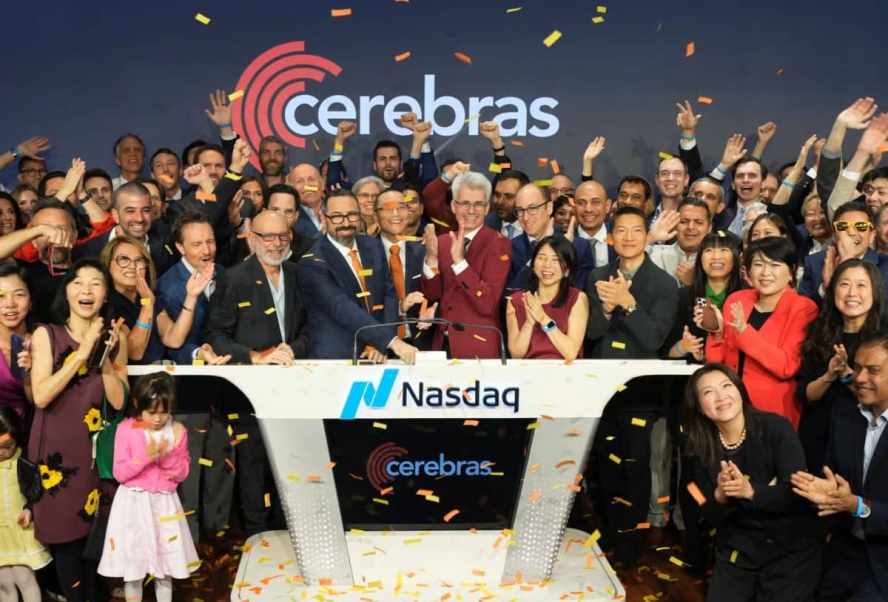
AI chipmaker Cerebras Systems debuted on the Nasdaq with shares opening at $350 after pricing at $185, giving the wafer-scale chip company a fully diluted valuation of roughly $106.75 billion. By close, the stock settled at $331.07 — still up 68% — pushing the market cap near $95 billion. The company raised $5.55 billion in what is the largest U.S. tech IPO since Uber in 2019. Cerebras’ flagship Wafer Scale Engine 3 uses an entire silicon wafer as a single processor, and the company counts OpenAI and Amazon among its customers. The IPO drew demand for more than 20 times the shares available, underscoring Wall Street’s insatiable appetite for AI infrastructure plays beyond Nvidia.
Musk v. OpenAI Trial Wraps Up — Jury Begins Deliberations Monday
Closing arguments concluded in the landmark Oakland federal trial where Elon Musk is suing OpenAI and Sam Altman for allegedly abandoning the company’s nonprofit mission to chase profits. Musk is seeking $150 billion in damages payable to the nonprofit arm and the removal of Altman and Greg Brockman. His legal team accused Altman of lying under oath, while OpenAI’s lawyers argued Musk had known about for-profit plans since 2018 and was motivated by losing control. Microsoft defended its role as a responsible investor after testimony revealed it has spent over $100 billion on OpenAI including infrastructure. The jury begins deliberations Monday, and the outcome could reshape how AI companies balance mission-driven origins with investor demands.
OpenAI Launches $4 Billion DeployCo to Embed AI in Corporations
OpenAI unveiled the OpenAI Deployment Company (DeployCo), a new business unit backed by over $4 billion from 19 partners including Brookfield and TPG. The unit will embed engineers directly within corporations to accelerate the integration of frontier AI models into enterprise workflows. OpenAI also acquired consulting firm Tomoro to bring on 150 forward-deployed engineers. Revenue chief Dresser called enterprise AI adoption a “tipping point,” and the move is widely seen as OpenAI’s direct response to Anthropic’s growing enterprise dominance. This signals a new era where AI labs are not just building models — they are building services businesses around them.
Anthropic Overtakes OpenAI in Enterprise Customers, Launches Claude for Small Business
In a striking milestone, Anthropic has surpassed OpenAI in verified business customer counts according to data from corporate spend platform Ramp. The company also expanded its reach this week by launching Claude for Small Business, forming a strategic alliance with PwC, and establishing a $200 million partnership with the Gates Foundation. Meanwhile, Anthropic’s unreleased frontier model Mythos continues to draw attention — the company briefed the U.S. House Homeland Security Committee on its capabilities, and the Department of Defense is deploying Mythos to find and patch software vulnerabilities across government systems. A Pentagon cyber official said models like Mythos could fundamentally change warfare.
Samsung’s 45,000 Workers Prepare 18-Day Strike Over AI Bonus Disparities
Samsung Electronics faces a major labor disruption as more than 45,000 workers prepare for an 18-day strike starting May 21. The conflict stems from stark bonus disparities between Samsung’s memory chip division — which is riding the AI boom — and its struggling logic and foundry operations. Memory chip employees received bonuses up to 607% of annual salary, while logic chip workers got just 50–100%. Union leaders say the pay gap is undermining Samsung’s goal of becoming a full-spectrum semiconductor provider. Analysts warn the strike could result in $14–21 billion in operating profit losses and send ripple effects through the global AI chip supply chain, potentially slowing the rollout of AI infrastructure that depends on Samsung memory chips.
U.S. and China Begin Talks on AI Guardrails as Agentic Race Heats Up
The Trump administration has opened formal discussions with Beijing on AI safety guardrails, a sign that frontier AI is now being treated in the same geopolitical category as defense systems and nuclear-era coordination. Treasury Secretary Bessent told CNBC the U.S. can hold these talks from a position of strength because it leads in AI development. Separately, the Center for AI Standards and Innovation announced agreements with Google DeepMind, Microsoft, and xAI to evaluate their models before public release. Meanwhile, the agentic AI race continued to accelerate with OpenAI releasing the Codex mobile app, xAI launching the Grok Build coding agent in beta, and Moonshot AI debuting its Kimi WebBridge browser extension — all in a single week.
The Big Picture
This week crystallized a new phase in the AI era. The infrastructure buildout is no longer speculative — it is being priced in IPOs, deployed across governments, and negotiated between superpowers. Cerebras’ blockbuster debut shows public markets are ready to bet big on AI hardware beyond Nvidia, while the Musk v. OpenAI trial forces an industry reckoning on whether mission-driven AI companies can coexist with trillion-dollar valuations. On the enterprise front, the race between OpenAI and Anthropic has shifted from model benchmarks to business customer counts and embedded deployment. And as Samsung’s looming strike and the U.S.-China talks demonstrate, AI’s real-world consequences — on labor, supply chains, and international relations — are becoming impossible to ignore.
Sources
- Cerebras pops 89% in Nasdaq IPO debut, hits $106B valuation amid AI frenzy — TechStartups
- Cerebras stock IPO debut — CNBC
- Top Tech News Today, May 15, 2026 — TechStartups
- AI Leaders Weekly Briefing – May 15, 2026 — Distill Intelligence
- AI News for the Week of May 15 — Solutions Review
- U.S. can hold AI talks with China because ‘we are in the lead’ — CNBC
- Microsoft, Google and xAI will let the government test their AI models — CNN
- Trump Says He Discussed ‘Standard’ AI Safety Guardrails With Xi — Gizmodo
- Latest AI News and Updates — Crescendo AI


Responses