April 03, 2026 – AI Daily Recap
Thursday brought a wave of consequential AI developments — from Anthropic’s embarrassing source code spill to OpenAI pulling the plug on its video ambitions, while Alibaba and Huawei flex China’s growing AI muscle and U.S. states rush to regulate chatbots.
Anthropic’s Claude Code Source Leak Exposes 512,000 Lines of Code
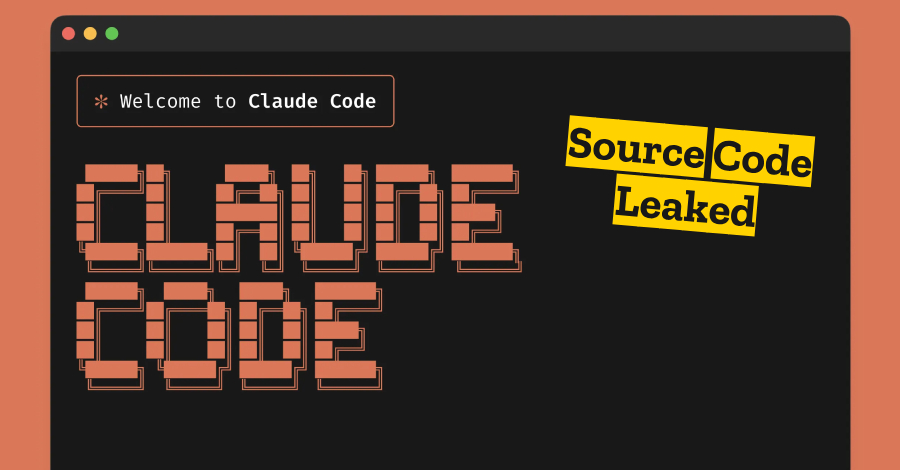
Anthropic is dealing with one of the most significant AI security incidents to date after the company accidentally shipped the entire source code of Claude Code to the public npm registry. The leak, caused by a misconfigured debug file in Claude Code v2.1.88, exposed a 57MB source map file containing 1,900 files and 512,000 lines of unobfuscated TypeScript. The leaked codebase — now sitting at over 84,000 stars on GitHub — revealed the core engine for LLM API calls, tool-call loops, permission models, and dozens of unreleased feature flags, including a “persistent assistant” background mode. To make matters worse, this comes just days after Anthropic accidentally exposed nearly 3,000 internal files — including draft documentation for a powerful upcoming model called Claude Mythos. Anthropic insists no customer data was compromised, calling it a “release packaging issue caused by human error.”
Sam Altman Explains Why OpenAI Killed Sora
Sam Altman offered a candid explanation this week for why OpenAI is shutting down Sora, the company’s text-to-video generation tool. The numbers tell a brutal story: after launch, Sora’s user base peaked at around one million before collapsing to under 500,000, all while the service was burning roughly $1 million per day in compute costs. The Sora web app will go dark on April 26, with the API following on September 24. The fallout extends beyond OpenAI — Disney, which had committed $1 billion to a Sora partnership, reportedly found out about the shutdown less than an hour before the public announcement, killing the deal. OpenAI is now pivoting resources toward coding tools and enterprise customers.
Alibaba Drops Qwen 3.6-Plus With 1M Token Context
Alibaba released Qwen 3.6-Plus on Wednesday, its third proprietary model drop in just a few days — and this one packs serious punch. The model features a 1-million-token context window and is explicitly built for agentic AI deployment, capable of breaking down complex programming tasks, writing and testing code, and troubleshooting iteratively until completion. As a native multimodal model, it can generate front-end web pages and produce code from screenshots and design drafts. The benchmarks are notable: Alibaba claims Qwen 3.6-Plus matches Anthropic’s Claude Opus 4.5 on SWE-bench and Terminal-Bench 2.0. Available at just $0.29 per million input tokens, the model will be integrated across Alibaba’s ecosystem and is compatible with leading coding assistants including Claude Code and Cline.
Huawei’s 950PR Chip Wins Big Orders From ByteDance and Alibaba
Huawei’s new 950PR AI inference chip is gaining real traction, with ByteDance and Alibaba planning to place large orders after positive customer testing. The chip, which comes in two versions — a standard model at approximately 50,000 yuan ($6,900) and a premium HBM version at 70,000 yuan — marks a significant shift in China’s AI hardware strategy. What’s turning heads is the chip’s improved compatibility with Nvidia’s CUDA software ecosystem and better response speeds, making migration less painful for developers. Huawei aims to ship 750,000 units this year, with mass production beginning this month. The timing is strategic: as U.S. export restrictions continue to tighten, Chinese tech firms are increasingly looking to domestic alternatives for their inference workloads.
78 AI Chatbot Bills Now Active Across 27 U.S. States
The regulatory landscape for AI is accelerating rapidly at the state level. Six weeks into the 2026 legislative season, 78 chatbot bills are alive in 27 states, reflecting growing concern over the safety of AI-powered conversational tools. Washington Governor Bob Ferguson recently signed two AI-related bills into law — HB 2225 targeting chatbot safety and HB 1170 addressing AI provenance. Meanwhile, Tennessee Governor Bill Lee signed SB 1580, which prohibits any AI system from representing itself as a qualified mental health professional — a bill that passed both chambers unanimously. These bills commonly mandate age verification, parental consent mechanisms, harmful content prohibitions, and self-harm response protocols, signaling a clear pattern: states are not waiting for federal action.
OpenAI Hits $2B Monthly Revenue as IPO Looms
Amid the Sora shutdown and strategic pivots, OpenAI’s financial position tells a different story. The company is now generating $2 billion per month in revenue and is actively preparing for an IPO that could redefine AI market dynamics. This comes on the heels of a record-breaking $122 billion funding round backed by SoftBank, Andreessen Horowitz, and Fidelity. The sheer scale of the numbers underscores a growing divergence in the AI industry: while some products like Sora fail to find product-market fit, the core business of language models and enterprise AI is printing money at a pace few anticipated.
The Big Picture
Today’s headlines paint a picture of an AI industry in rapid maturation. Anthropic’s back-to-back security incidents raise serious questions about operational rigor at one of the field’s most safety-conscious labs. OpenAI’s Sora shutdown is a stark reminder that impressive demos don’t guarantee product-market fit — even with a billion-dollar partner like Disney on board. Meanwhile, Alibaba’s aggressive model releases and Huawei’s chip momentum show China’s AI ecosystem building genuine independence from Western infrastructure. And with nearly 80 chatbot bills moving through state legislatures, the regulatory reckoning that many predicted is no longer theoretical. The industry is entering a phase where execution, not just capability, separates the winners from the also-rans.
Sources
- The Hacker News — Claude Code Source Leaked via npm Packaging Error
- VentureBeat — Claude Code’s Source Code Appears to Have Leaked
- Fortune — Anthropic Leaks Source Code in Second Major Security Breach
- TechCrunch — Why OpenAI Really Shut Down Sora
- TechBriefly — Sam Altman Explains Why OpenAI Discontinues Sora
- 80 Level — Sora Was Reportedly Costing OpenAI $1 Million Per Day
- Caixin Global — Alibaba Releases Qwen 3.6-Plus AI Model
- Seeking Alpha — Alibaba Unveils Agentic AI-Focused Model Qwen3.6-Plus
- CNBC — Huawei’s New AI Chip Finds Favor With ByteDance, Alibaba
- Shashi — Huawei’s 950PR: The Chip That Learned to Speak CUDA
- Transparency Coalition — AI Legislative Update: April 3, 2026
- ComplianceHub — Is 2026 the Year of the Chatbot Bill?
- Crescendo AI — Latest AI News and Breakthroughs 2026
- AI Funding Tracker — AI Startup Funding News Today




Responses