
April 07, 2026 – AI Daily Recap

The AI industry is moving at breakneck speed this week. Anthropic’s revenue run rate has tripled to $30 billion in mere months, Iran has issued threats against Stargate data centers, Google’s open-source Gemma 4 is gaining rapid traction, and Microsoft is pouring $10 billion into Japan’s AI future. Here’s everything you need to know.
Anthropic Hits $30 Billion Revenue Run Rate, Seals Broadcom-Google TPU Deal

Anthropic’s annualized revenue run rate has surpassed $30 billion, up from roughly $9 billion at the end of 2025 — a more than threefold increase that puts the Claude maker in rare company. Fewer than 130 S&P 500 companies booked at least $30 billion in sales over the past twelve months. The company now counts more than 1,000 business customers spending over $1 million annually, a figure that has more than doubled since February. To fuel this growth, Anthropic confirmed a landmark infrastructure partnership with Broadcom and Google to deliver approximately 3.5 gigawatts of TPU computing capacity — a deal that underscores just how capital-intensive the AI race has become.
Anthropic Acquires Coefficient Bio for $400 Million

In a separate but equally telling move, Anthropic acquired stealth biotech startup Coefficient Bio in a deal valued at approximately $400 million. The New York-based company had fewer than ten employees — nearly all former Genentech computational biology researchers — no publicly known product, and no disclosed revenue. The price tag signals Anthropic’s bet on what it can build in pharmaceutical research and clinical operations with the right talent. Major pharma companies including Sanofi and Eli Lilly are already integrating Claude into drug discovery workflows, and this acquisition deepens that ambition considerably.
Google Gemma 4 Crosses 2 Million Downloads
Google’s Gemma 4 family of open-source models has surpassed 2 million downloads since launching in late March, a strong signal that the open-weight AI ecosystem continues to thrive. Released under the Apache 2.0 license — a first for the Gemma family — the models come in four sizes, including edge-optimized variants and a 31B dense flagship. All sizes support multimodal inputs, native reasoning, and agentic workflows with context windows up to 256K tokens. Since the first Gemma generation, developers have downloaded models from the Gemmaverse over 400 million times, producing more than 100,000 community variants.
Iran Threatens Stargate AI Data Centers

In a story that blurs the lines between geopolitics and technology infrastructure, Iran has issued threats targeting Stargate AI data centers. The development highlights the growing strategic importance of AI compute infrastructure on the global stage. As nations and corporations pour hundreds of billions of dollars into building out data center capacity, these facilities are increasingly being viewed not just as business assets but as critical national infrastructure — and, potentially, as targets in geopolitical conflicts.
Microsoft Invests $10 Billion in Japan’s AI Future
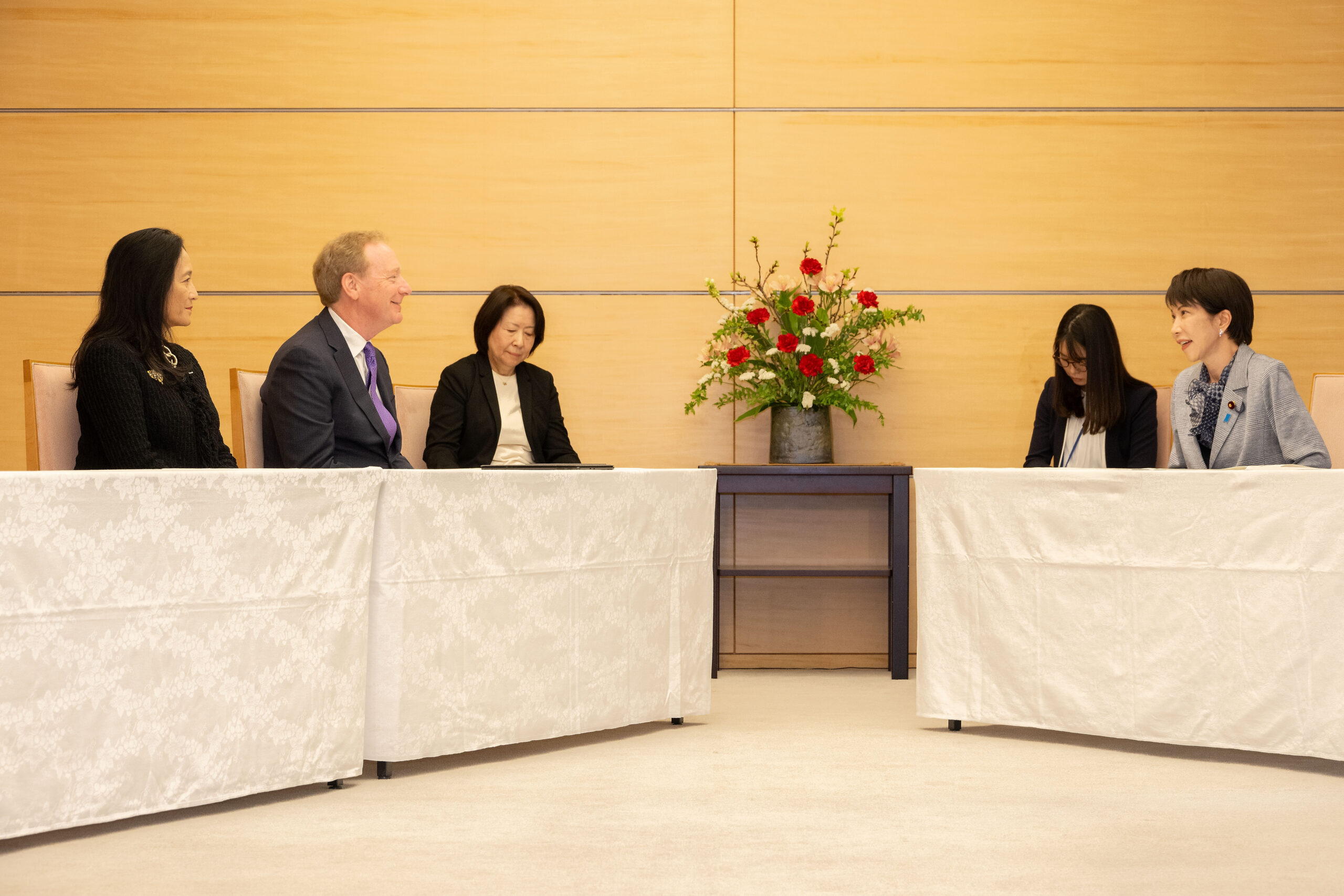
Microsoft announced a $10 billion investment in Japan spanning 2026 through 2029, covering AI infrastructure, cybersecurity partnerships, and workforce training for more than one million engineers by 2030. The initiative builds on a previous $2.9 billion commitment made in 2024 and will be developed in partnership with Sakura Internet and SoftBank, which will supply GPUs and other computing resources. Sakura Internet’s stock jumped 20% on the news, underscoring investor confidence in the regional AI buildout.
OpenAI Outlines Vision for the AI Economy

OpenAI leadership has published a sweeping policy vision for how economies should adapt to AI-driven transformation, proposing ideas including public wealth funds, robot taxes, and a four-day work week. The proposals come as the company surpasses $25 billion in annualized revenue and reportedly takes early steps toward a public listing. Whether or not these specific ideas gain traction, the fact that one of the world’s largest AI companies is publicly advocating for structural economic reform signals a growing awareness within the industry that technological progress and social policy must evolve together.
The Big Picture
Today’s headlines paint a picture of an AI industry that is simultaneously scaling to unprecedented financial heights and colliding with real-world complexity. Anthropic’s revenue trajectory and Broadcom deal illustrate the sheer capital flows now required to compete at the frontier. Google’s Gemma 4 success shows open-source models remain a vital counterweight. Meanwhile, geopolitical threats to data centers, massive cross-border infrastructure investments, and public debates about AI’s economic impact all point to the same conclusion: AI is no longer just a technology story. It is an infrastructure story, a national security story, and increasingly, a social policy story. The companies and nations that navigate all three dimensions will define the next chapter.
Sources
- Anthropic taps Google and Broadcom for yet more AI chips as revenue run rate tops $30B — SiliconANGLE
- Anthropic Tops $30 Billion Run Rate, Seals Deal With Broadcom — Bloomberg
- Anthropic buys biotech startup Coefficient Bio in $400M deal — TechCrunch
- AI Giant Anthropic Leans Into Life Sciences With $400M Coefficient Bio Catch — BioSpace
- Gemma 4: Byte for byte, the most capable open models — Google
- Gemma 4: Expanding the Gemmaverse with Apache 2.0 — Google Open Source Blog
- Iran threatens Stargate AI data centers — TechCrunch
- Microsoft deepens its commitment to Japan with $10 billion investment — Microsoft
- Japan’s Sakura Internet jumps 20% as Microsoft plans $10 billion AI push — CNBC
- OpenAI’s vision for the AI economy: public wealth funds, robot taxes, and a four-day work week — TechCrunch




Responses