April 10, 2026 – AI Daily Recap

The AI industry delivered a packed news cycle this week with Meta unveiling its most ambitious model yet, Anthropic shipping enterprise-grade agent infrastructure, and Intel locking in a multiyear chip deal with Google. Meanwhile, a coalition of US AI leaders is fighting back against model theft from China, Visa is enabling autonomous AI payments, and researchers are proposing financial safety nets for agentic transactions. Here’s everything you need to know.
Meta Launches Muse Spark, Its Most Powerful AI Model Yet
Meta debuted Muse Spark, the first model from its new Muse series developed by Meta Superintelligence Labs. The natively multimodal reasoning model supports tool-use, visual chain of thought, and multi-agent orchestration, and is rolling out across WhatsApp, Instagram, Facebook, Messenger, and Meta’s AI glasses. Independent evaluations showed Muse Spark catching up with top models from Google, OpenAI, and Anthropic in language and visual understanding, though it still lags in coding and abstract reasoning. Meta also confirmed its AI-related capital expenditures in 2026 will be between $115 billion and $135 billion, nearly twice its capex from the previous year.
Anthropic Ships Claude Managed Agents for Enterprise AI
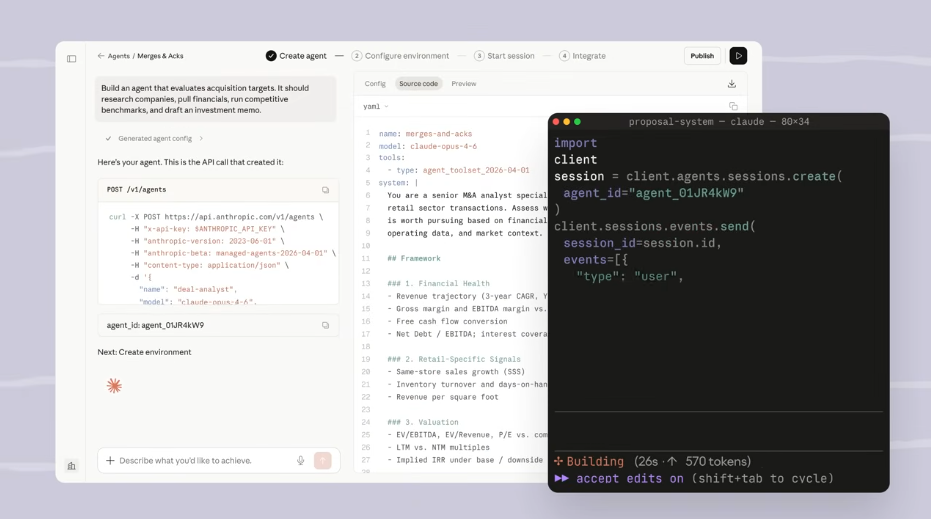
Anthropic launched Claude Managed Agents in public beta — a composable API suite that lets developers build and deploy scalable cloud-hosted agents from prototype to production. The service provides managed hosting, automatic scaling, built-in memory and tools, session tracing, and secure sandboxed code execution while Anthropic’s infrastructure handles tool orchestration, context management, and error recovery. Priced at $0.08 per session hour on top of standard API token costs, early adopters include Notion, Asana, Rakuten, and Sentry.
Intel and Google Lock In Multiyear AI Chip Partnership
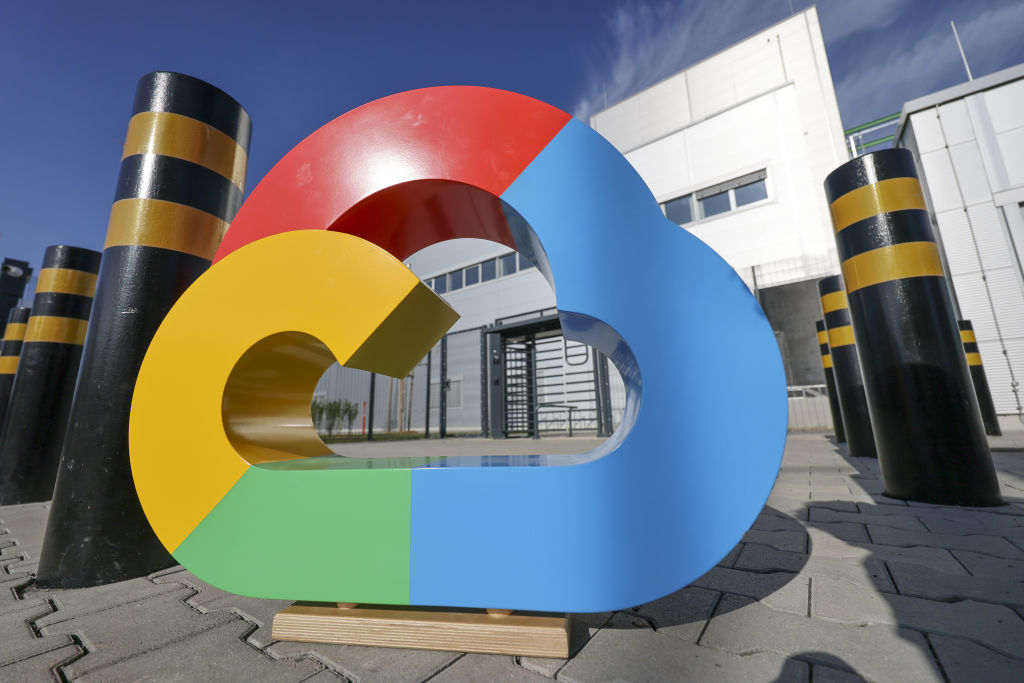
Intel and Google announced a multiyear collaboration to advance AI and cloud infrastructure, with Google committing to deploy multiple generations of Intel Xeon processors across its AI data centers. The partnership also expands co-development of custom ASIC-based Infrastructure Processing Units (IPUs) — programmable accelerators that offload networking, storage, and security functions from host CPUs. Intel stock rose on the news, underscoring the market’s recognition that while GPUs dominate training, CPUs remain critical for inference and general AI infrastructure.
OpenAI, Anthropic, and Google Unite Against Chinese Model Theft

Three of America’s leading AI companies — OpenAI, Anthropic, and Google — have begun working together through the Frontier Model Forum to detect and prevent adversarial distillation attempts by Chinese competitors. Anthropic alone documented 16 million unauthorized exchanges from three Chinese companies using approximately 24,000 fraudulently created accounts. The collaboration signals an unprecedented level of cooperation among rivals in defending US AI intellectual property.
Visa and Nevermined Enable Autonomous AI Agent Payments
Nevermined integrated Visa Intelligent Commerce, Coinbase’s x402 protocol, and VGS to let AI agents autonomously purchase digital goods and services on behalf of users. The system includes robust guardrails — total budget limits, per-purchase caps, merchant restrictions, and time-based validity windows — so users maintain control while agents transact. This addresses a growing monetization gap as AI agents increasingly consume content across the internet with no practical mechanism for merchants to sell individual resources to machines.
Researchers Propose Financial Safety Net for AI Agent Transactions

A cross-institutional team from Google DeepMind, Microsoft Research, Columbia University, and T54 Labs released the Agentic Risk Standard (ARS), a framework that applies escrow, underwriting, and collateralization to protect users when AI agents handle financial transactions autonomously. Simulations showed up to 61% reduction in user losses compared to ecosystems without underwriting. The open-source standard, available on GitHub, draws from established risk-management practices in construction, e-commerce, and financial markets.
The Big Picture
Today’s news paints a clear picture of an AI industry entering its infrastructure era. Meta’s massive capex bet and Intel-Google’s chip partnership show that the hardware arms race is intensifying. Meanwhile, the shift from model releases to production-grade tooling — Anthropic’s managed agents, Visa’s agentic payments, and the Agentic Risk Standard — signals that the industry is rapidly building the connective tissue needed for AI agents to operate reliably in the real world. The coordinated defense against model theft from China adds a geopolitical dimension that will only grow more prominent as these systems become more valuable. We’re watching the plumbing of the agentic economy get built in real time.
Sources
- Meta debuts new AI model, attempting to catch Google, OpenAI after spending billions — CNBC
- Anthropic launches Claude Managed Agents to speed up AI agent development — SiliconANGLE
- Google and Intel deepen AI infrastructure partnership — TechCrunch
- OpenAI, Anthropic, Google unite to combat model copying in China — Bloomberg
- Visa and Coinbase team with Nevermined on AI agent commerce — Crypto Briefing
- What do you do when your AI agent hallucinates with your money? — Fortune
- OpenAI, Anthropic and Google Unite Against Chinese AI Theft — RoboRhythms
- Google expands partnership with Intel for AI chips — CNBC
- Visa unveils platform for agent-driven shopping and checkout — Dataconomy
- Anthropic scales up with enterprise features for Claude Cowork and Managed Agents — 9to5Mac




Responses