
May 09, 2026 – AI Daily Recap


Friday’s AI news was dominated by staggering financial milestones and strategic pivots. Anthropic is on the verge of closing a $50 billion funding round at a ~$900 billion valuation, Meta shipped its first proprietary flagship model in a sharp break from open-source Llama, and OpenAI crossed $25 billion in annualized revenue while eyeing a public listing. Meanwhile, Novo Nordisk tapped OpenAI to overhaul its entire pharmaceutical pipeline, the Five Eyes alliance issued its first joint guidance on agentic AI security, and Cohere merged with Germany’s Aleph Alpha to build a sovereign AI alternative.
Anthropic Targets $900B Valuation in Landmark $50B Round
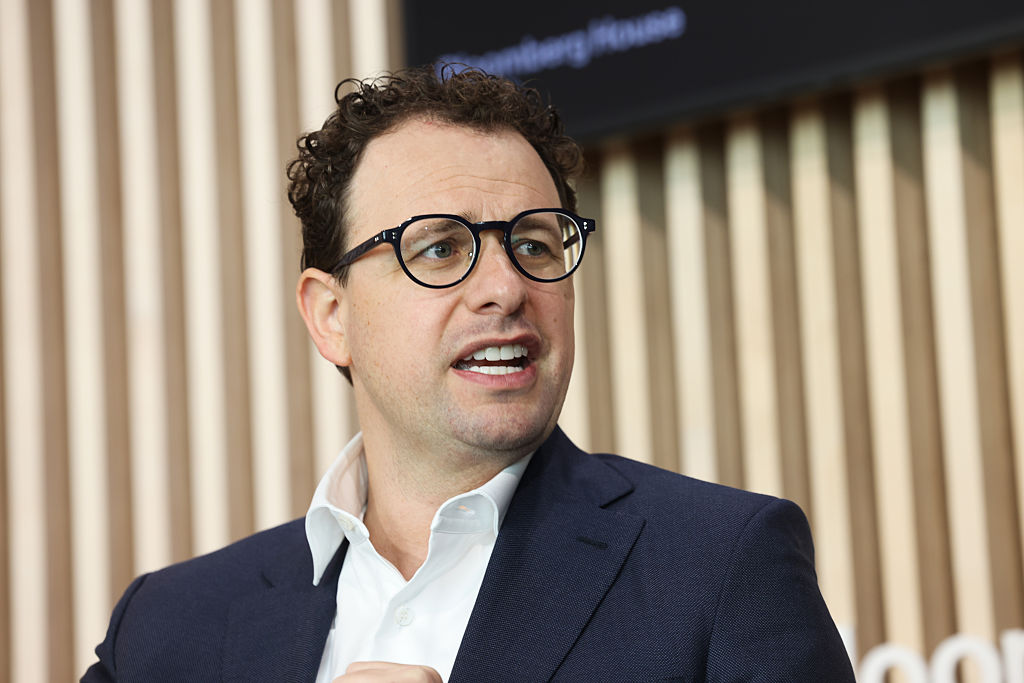
Anthropic is asking investors to submit allocations for what may be the largest private funding round in history — up to $50 billion at a ~$900 billion valuation, according to the Financial Times and TechCrunch. At that figure, the Claude maker would surpass OpenAI’s $852 billion post-money valuation from earlier this year. The company’s annualized revenue has surpassed $30 billion, with enterprise adoption accelerating — roughly 40% of its top 50 customers are financial institutions. CEO Dario Amodei recently warned that SaaS companies that fail to adopt AI could face bankruptcy, while calling for stronger regulatory guardrails around frontier model releases. This is expected to be Anthropic’s final private round before a potential IPO later this year.
Meta Launches Muse Spark, Its First Closed Flagship Model
Meta unveiled Muse Spark, the first flagship large language model built by its newly formed Superintelligence Labs under Chief AI Officer Alexandr Wang. The release marks a significant strategic departure from Meta’s open-source Llama approach — Muse Spark is proprietary. The natively multimodal model supports tool-use, visual chain of thought, and multi-agent orchestration, delivering competitive performance on reasoning, health, and agentic tasks at a fraction of the compute cost of Llama 4 mid-size variants. Meta simultaneously confirmed AI capital expenditures of $115–135 billion for 2026 — nearly double 2025 spending.
OpenAI Surpasses $25B ARR, Eyes IPO

OpenAI surpassed $25 billion in annualized revenue and is taking early steps toward a public listing, potentially as soon as late 2026. The revenue milestone was confirmed during testimony at the ongoing Elon Musk trial, where co-founder Greg Brockman acknowledged the company is exploring an IPO. OpenAI now generates roughly $2 billion per month, with enterprise making up more than 40% of revenue and weekly active users reaching 910 million. While OpenAI maintains a revenue lead, Anthropic is gaining ground rapidly — first-time business buyers on the Ramp platform are choosing Anthropic at 3x the rate of OpenAI.
Novo Nordisk Partners with OpenAI for Full AI Integration
Danish pharmaceutical giant Novo Nordisk announced a strategic partnership with OpenAI to deploy AI across its entire business — from drug discovery and clinical trials to manufacturing, supply chains, and commercial operations — with full integration planned by end of 2026. The partnership is designed to accelerate identification of new obesity and diabetes treatments as Novo fights to regain market ground against Eli Lilly. CEO Mike Doustdar stated the goal is to accelerate scientists rather than replace them, though the company acknowledged AI would reduce future hiring growth in certain functions.
Five Eyes Release Joint Agentic AI Security Guidance
Cybersecurity agencies from the United States, Australia, Canada, New Zealand, and the United Kingdom jointly published guidance titled “Careful Adoption of Agentic AI Services,” the first coordinated regulatory statement on autonomous agent security. The document identifies five risk categories — privilege, design and configuration, behavior, structural, and accountability — and warns that AI agents in critical infrastructure have been granted dangerous levels of autonomy with virtually no governance framework. The agencies recommend that each agent carry a verified, cryptographically secured identity, use short-lived credentials, and encrypt all inter-agent communications.
Cohere Merges with Aleph Alpha in $20B Sovereign AI Push
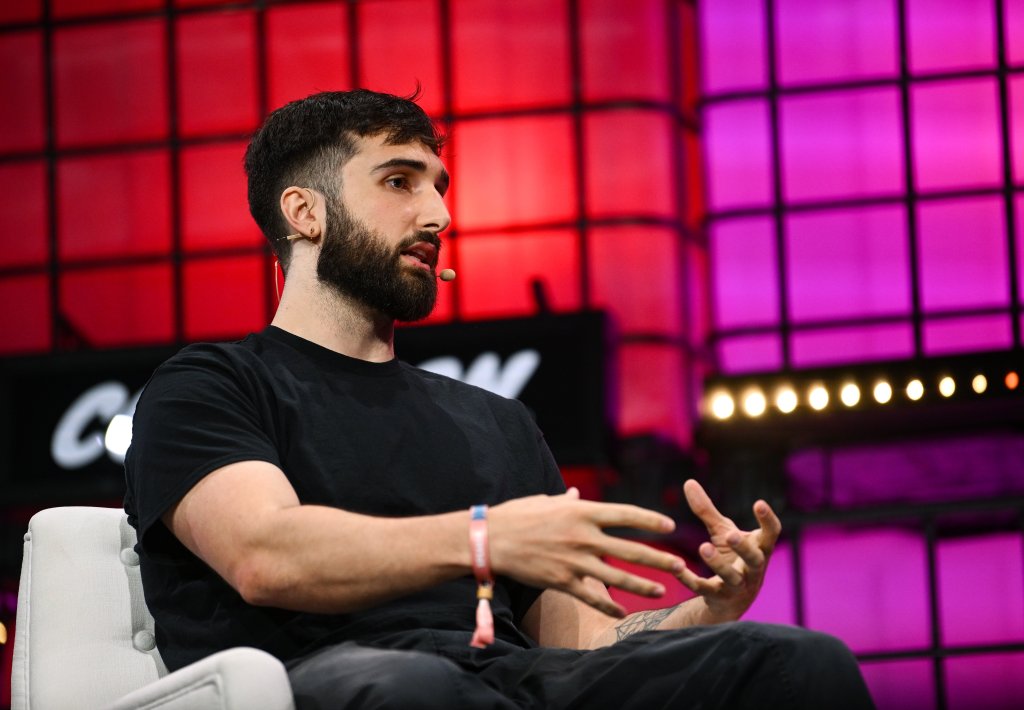
Canadian AI company Cohere announced a merger with Germany’s Aleph Alpha, creating a combined entity valued at $20 billion. Backed by €500 million from Schwarz Group, the deal positions the new company as a sovereign AI alternative to the US-China duopoly for enterprises and governments seeking greater independence and data control. The merger was directly supported by both the Canadian and German governments under the Canada-Germany Sovereign Technology Alliance. The combined company will operate under the Cohere brand with dual headquarters in Toronto and Germany.
The Big Picture
The numbers tell the story: $900 billion valuations, $135 billion capex budgets, and $25 billion revenue run rates. The AI industry has entered a phase where the financial stakes match the technological ambitions. Anthropic’s potential overtaking of OpenAI in valuation — while trailing in revenue — underscores how much investors are betting on enterprise adoption and safety-first approaches. Meta’s pivot from open-source to proprietary with Muse Spark signals that even the most committed open-weight players see strategic value in keeping their best models closed. And as the Five Eyes guidance makes clear, the rapid deployment of agentic AI systems is outpacing the governance frameworks meant to keep them in check. The race is no longer just about building the best model — it’s about building the best business, the safest infrastructure, and the most defensible moat.
Sources
- TechCrunch — Anthropic potential $900B+ valuation round
- CNBC — Anthropic weighs raising funds at $900B valuation
- Meta Newsroom — Introducing Muse Spark
- TechCrunch — Meta debuts Muse Spark
- The Information — OpenAI Tops $25B in Annualized Revenue
- CNBC — Novo Nordisk partners with OpenAI
- Fierce Pharma — Novo taps OpenAI across operations
- SecurityWeek — Five Eyes Release AI Security Guidance
- The Register — Five Eyes warn agentic AI is too dangerous
- CyberScoop — US government publishes agentic AI guidance
- TechCrunch — Cohere acquires Aleph Alpha
- Sifted — Aleph Alpha strikes $20B merger deal



Responses