April 16, 2026 – AI Daily Recap

From Anthropic teasing its next flagship model to Snap slashing a thousand jobs in the name of AI efficiency, today’s headlines capture both the promise and the upheaval of the current AI moment. Here’s everything you need to know.
Anthropic Preps Claude Opus 4.7 and a New AI Design Tool

Anthropic is reportedly preparing to launch Claude Opus 4.7, the next iteration of its flagship AI model, as early as this week. The upgrade builds on Claude Opus 4.6, which launched in February with a one-million-token context window and strong coding benchmarks. Opus 4.7 is expected to improve multi-step reasoning, long-duration task handling, and multi-agent coordination. Alongside the model, Anthropic is also unveiling an AI-powered design tool that lets users build websites, presentations, and landing pages using plain English prompts — a move that sent shares of Adobe, Figma, and Wix down more than two percent on the news.
Snap Cuts 1,000 Jobs as AI Takes Over 65% of Its Coding

Snap, the parent company of Snapchat, announced it is laying off approximately 1,000 employees — 16% of its workforce — citing AI-driven efficiencies as a primary driver. CEO Evan Spiegel framed the cuts as a response to a “crucible moment,” noting that AI now generates more than 65% of Snap’s new code. The company expects to reduce its annualized cost base by over $500 million by the second half of 2026. Affected U.S. employees will receive four months of severance, healthcare coverage, and equity vesting. Snap’s stock jumped about 7% on the announcement — a stark reminder that Wall Street often rewards headcount reductions.
Novo Nordisk and OpenAI Partner on AI-Powered Drug Discovery
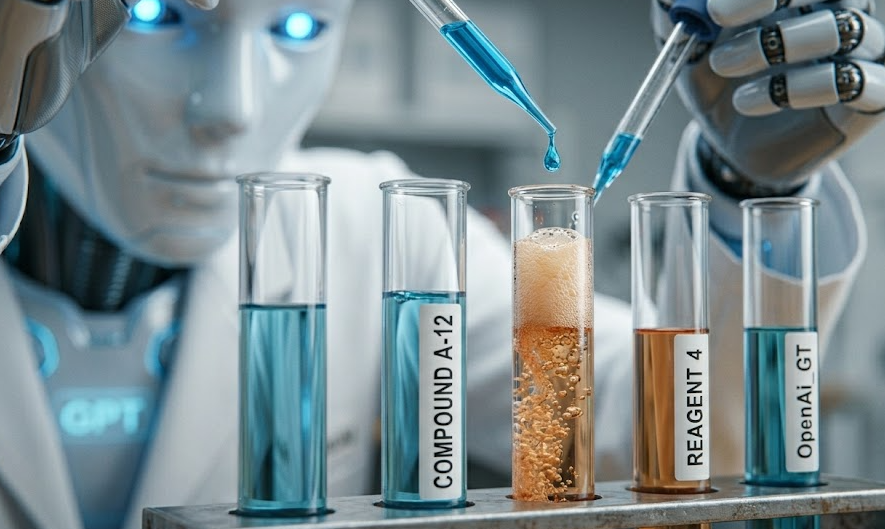
Novo Nordisk, the Danish pharma giant behind blockbuster GLP-1 drugs like Ozempic and Wegovy, has signed a strategic partnership with OpenAI to deploy AI across research and development, manufacturing, and corporate operations. The deal will use OpenAI’s models to analyze complex datasets, identify promising drug candidates, and reduce the time from research to patient. Pilot programs are set to launch immediately, with full integration targeted by the end of 2026. OpenAI will also help upskill Novo Nordisk’s global workforce on AI literacy — a sign that enterprise AI adoption is moving well beyond chatbots.
Stanford AI Index 2026: Record Capabilities, Declining Trust
Stanford’s 2026 AI Index Report paints a picture of an industry moving at breakneck speed — and a public struggling to keep up. On the capability front, SWE-bench Verified coding scores climbed from 60% to nearly 100% in a single year, and frontier models now top 50% on Humanity’s Last Exam. The U.S.-China model gap has effectively closed, with ByteDance’s Dola-Seed Preview trailing Anthropic’s Claude Opus 4.6 by just 2.7 percentage points on the Arena benchmark. But there’s a catch: the Foundation Model Transparency Index dropped to 40 points from 58, and while 59% of people feel optimistic about AI, 52% also report feeling nervous. U.S. private AI investment hit $285.9 billion in 2025 — 23 times China’s total.
AI Hiring Bias Lawsuit Against Workday Advances as Class Action
The landmark Mobley v. Workday case continues to gain momentum, with a federal court allowing it to proceed as a nationwide collective action under the Age Discrimination in Employment Act. Plaintiff Derek Mobley submitted over 100 applications through Workday’s platform and was rejected every time — often within minutes, sometimes in the middle of the night — without a single interview. A federal judge rejected Workday’s argument that applicants aren’t entitled to disparate impact protection under the ADEA, setting a major precedent for how civil rights law will apply to AI-driven hiring systems. With the EU AI Act now classifying all AI recruitment tools as “high-risk,” companies using automated screening face mounting legal exposure on both sides of the Atlantic.
The Big Picture
Today’s stories trace a clear throughline: AI is no longer a future promise — it’s reshaping workforces, legal frameworks, and entire industries right now. Snap’s decision to cut 16% of its staff while crediting AI for 65% of its coding output is perhaps the starkest example yet of what “AI efficiency” means for real workers. Meanwhile, Anthropic’s imminent Opus 4.7 launch and Novo Nordisk’s partnership with OpenAI show that the capability curve keeps steepening. The Stanford AI Index captures the tension perfectly: capabilities are at historic highs, but transparency and public trust are heading in the opposite direction. And as the Workday lawsuit demonstrates, the legal system is only beginning to catch up with the speed of deployment. The question isn’t whether AI will keep accelerating — it’s whether our institutions can keep pace.
Sources
- Anthropic To Launch Claude Opus 4.7 This Week — Dataconomy
- Exclusive: Anthropic Preps Opus 4.7 Model, AI Design Tool — The Information
- Anthropic to launch Claude Opus 4.7 and new AI design tool this week — TechBriefly
- Snap is cutting 1,000 jobs, 16% of its workforce — TechCrunch
- Snap’s stock jumps on plans to axe 16% of its workforce — CNBC
- Snap lays off 1,000 employees as AI takes over 65% of coding work — Tech Startups
- Novo Nordisk partners with OpenAI as AI drug discovery hopes mount — CNBC
- Novo taps OpenAI to deploy AI across R&D, manufacturing — Fierce Pharma
- OpenAI partners with Novo Nordisk to accelerate drug discovery — SiliconANGLE
- The 2026 AI Index Report — Stanford HAI
- Stanford’s AI Index for 2026 Shows the State of AI — IEEE Spectrum
- Stanford AI Index 2026: The Trust Gap Hits Critical Levels — eWeek
- Discrimination Lawsuit Over Workday’s AI Hiring Tools Can Proceed as Class Action — Fisher Phillips
- What the Workday Lawsuit Reveals About Future of AI Hiring — Best Lawyers
- Federal Court Grants Preliminary Certification in Landmark AI Hiring Bias Case — CDF Labor Law


Responses