
April 25, 2026 – AI Daily Recap

The AI arms race showed no signs of slowing this week as the biggest players shipped new models, struck massive infrastructure deals, and reorganized entire workforces around artificial intelligence. Here’s everything you need to know.
OpenAI Launches GPT-5.5, Its Most Agentic Model Yet

OpenAI officially released GPT-5.5 on Wednesday, calling it “a new class of intelligence for real work.” The model represents a significant leap in agentic capabilities, excelling at writing and debugging code, researching the web, analyzing data, creating documents, and operating software autonomously. Arriving just weeks after GPT-5.4, the rapid release cadence signals OpenAI’s push toward a unified AI “super app” that combines ChatGPT, Codex, and browser tools into a single interface. GPT-5.5 is rolling out to Plus, Pro, Business, and Enterprise subscribers, and while it carries a higher price tag than its predecessor, OpenAI says it is significantly more token-efficient, delivering better results with fewer tokens for most users. The company also touted its “strongest set of safeguards to date,” developed with internal and external red-teamers.
DeepSeek Drops V4, Its Most Powerful Open-Source Model
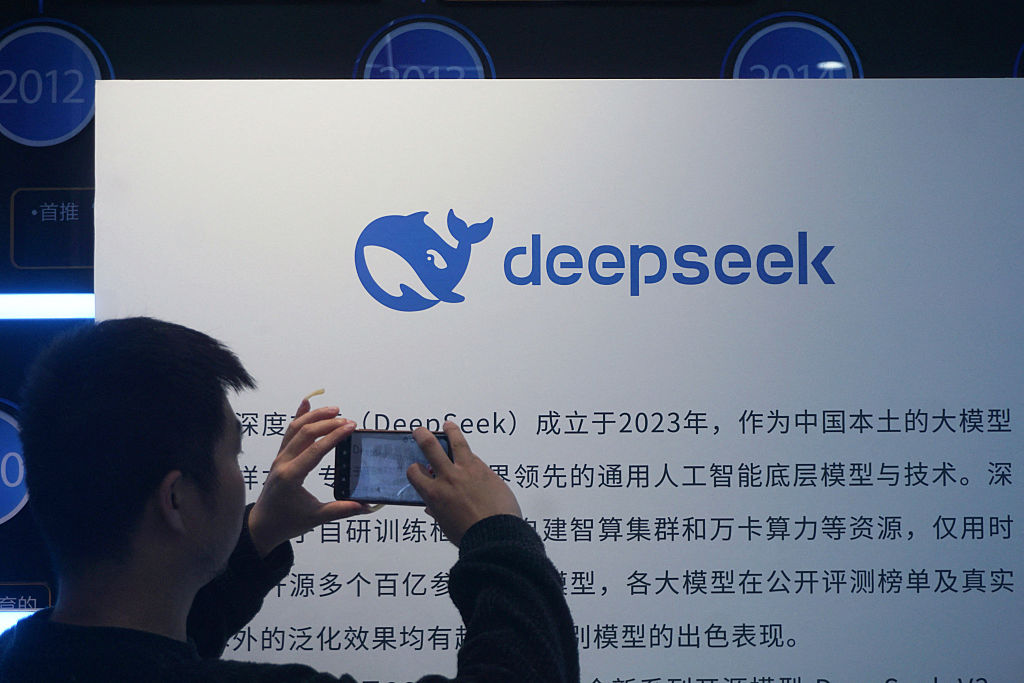
Almost exactly one year after its surprise debut shook Silicon Valley, China’s DeepSeek rolled out preview versions of its V4 series on Thursday. The release includes two models: V4-Pro, a larger model built for coding and complex agent tasks, and V4-Flash, a smaller, faster variant optimized for cost efficiency. DeepSeek highlighted a novel Hybrid Attention Architecture that improves long-conversation memory and a 1-million-token context window. The company claims V4-Pro-Max outperforms GPT-5.2 and Gemini 3.0 Pro on some benchmarks, though Bloomberg reports the models still trail the absolute frontier by roughly 3–6 months. V4-Flash comes in at just $0.14 per million input tokens — a fraction of what Western competitors charge — keeping open-source pressure on the industry’s pricing.
Amazon Doubles Down on Anthropic with $25 Billion Infrastructure Deal
Amazon agreed to invest up to $25 billion in Anthropic, on top of the $8 billion it has already poured into the Claude maker, as part of an expanded agreement to build out AI infrastructure. The deal includes $5 billion upfront at Anthropic’s latest $380 billion valuation, with up to $20 billion more tied to commercial milestones. In return, Anthropic committed to spending over $100 billion on AWS technologies over the next decade, including securing up to 5 gigawatts of capacity powered by Amazon’s Trainium3 chips. The investment lands just two months after Amazon also agreed to invest up to $50 billion in Anthropic’s chief rival, OpenAI — a hedge-everything strategy that underscores just how high the stakes are in the AI infrastructure race.
xAI Locks In $60 Billion Option to Acquire Cursor
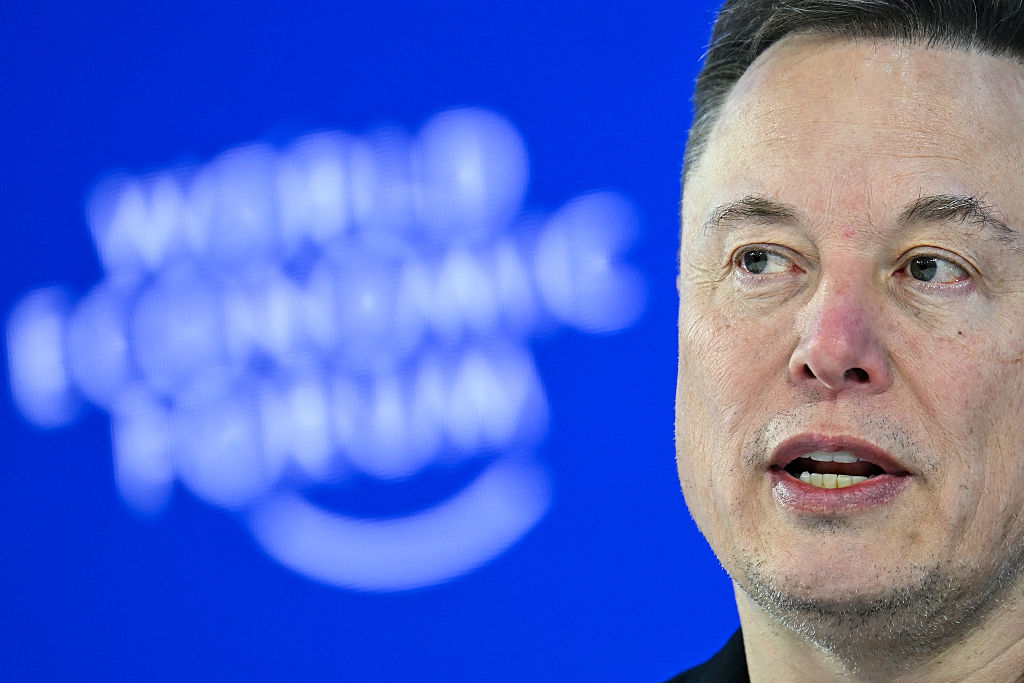
In a deal that could reshape the AI coding landscape, xAI struck a deal with Anysphere, the company behind the popular AI code editor Cursor, securing the option to acquire it for $60 billion later this year — or pay $10 billion for ongoing collaborative work. The move comes after SpaceX’s February acquisition of xAI in a deal that valued the combined entity at roughly $1.25 trillion. SpaceX has since filed a confidential S-1 with the SEC, targeting a post-IPO valuation of approximately $1.75 trillion. The Cursor play signals Musk’s ambition to own the full AI stack — from foundation models to developer tools — and could turn xAI into a direct competitor to Microsoft’s GitHub Copilot ecosystem.
Snap Cuts 1,000 Jobs, Blames AI for Making Smaller Teams Possible

Snap laid off roughly 1,000 full-time employees — about 16% of its global workforce — and closed over 300 open roles, in one of the starkest examples yet of AI-driven workforce restructuring. CEO Evan Spiegel told staff that “rapid advancements in artificial intelligence” now allow smaller teams to achieve the same output, with AI generating over 65% of new code at the company. The restructuring is expected to cut Snap’s annualized cost base by more than $500 million by the second half of 2026. U.S. employees received four months of severance, healthcare coverage, and equity vesting. Snap’s stock jumped on the news, reflecting investor appetite for AI-enabled efficiency gains even as they come at a human cost.
Tesla Triples AI Capital Spending to $25 Billion
Tesla raised its 2026 capital spending plan to over $25 billion — nearly triple last year’s $8.53 billion — in an aggressive bet on self-driving technology, Optimus humanoid robots, and robotaxi services. The plan includes a $3 billion research chip fab in Texas, shared with SpaceX and xAI, and expanded AI infrastructure for autonomy and humanoid robotics. Tesla has expanded its robotaxi pilot to Houston and Dallas, now operating without in-car safety monitors, and secured supervised FSD approval in the Netherlands with EU-wide approval expected soon. CEO Elon Musk cautioned investors to expect negative free cash flow in 2026 as Tesla builds out capacity for six factories and ramps AI-driven products, calling it a “leap of faith” moment for the company’s transformation into an AI and robotics company.
The Big Picture
This week crystallized the two-track reality of the AI industry in 2026. On one track, the model race is accelerating: OpenAI and DeepSeek shipped new flagship models within 24 hours of each other, while Amazon’s staggering investment in Anthropic and Tesla’s tripled capex show that the infrastructure buildout is far from over. On the other track, AI’s impact on the workforce is becoming impossible to ignore — Snap’s admission that AI now writes most of its code, enabling a 16% headcount reduction, is likely a preview of restructuring decisions across the tech sector. The xAI-Cursor deal adds another layer, suggesting that the next frontier of consolidation may be AI companies acquiring the very tools developers use to build with AI. The message is clear: the companies that control the models, the infrastructure, and the developer toolchain will define the next era of technology.
Sources
- Introducing GPT-5.5 — OpenAI
- OpenAI releases GPT-5.5, bringing company one step closer to an AI ‘super app’ — TechCrunch
- OpenAI announces GPT-5.5, its latest artificial intelligence model — CNBC
- DeepSeek previews new AI model that ‘closes the gap’ with frontier models — TechCrunch
- Three reasons why DeepSeek’s new model matters — MIT Technology Review
- China’s DeepSeek releases preview of long-awaited V4 model — CNBC
- Amazon to invest up to another $25 billion in Anthropic — CNBC
- Amazon and Anthropic expand strategic collaboration — About Amazon
- SpaceX is working with Cursor and has an option to buy the startup for $60B — TechCrunch
- Elon Musk’s SpaceX acquiring AI startup xAI ahead of potential IPO — CNBC
- Snap is cutting 1,000 jobs, 16% of its workforce — TechCrunch
- Snap’s stock jumps on plans to axe 16% of its workforce citing AI efficiencies — CNBC
- Tesla’s $25 billion spending plan tests investor faith — U.S. News
- Tesla just increased its spending plan to $25B — Yahoo Finance


Responses