
April 17, 2026 – AI Daily Recap

From Canva’s sweeping platform overhaul to Stanford’s warning that China has nearly erased the U.S. AI lead, today’s stories capture an industry in overdrive. Here’s everything that matters in AI from the past 24 hours.
Canva Unveils Canva AI 2.0, Redefining Design as an Agentic Platform
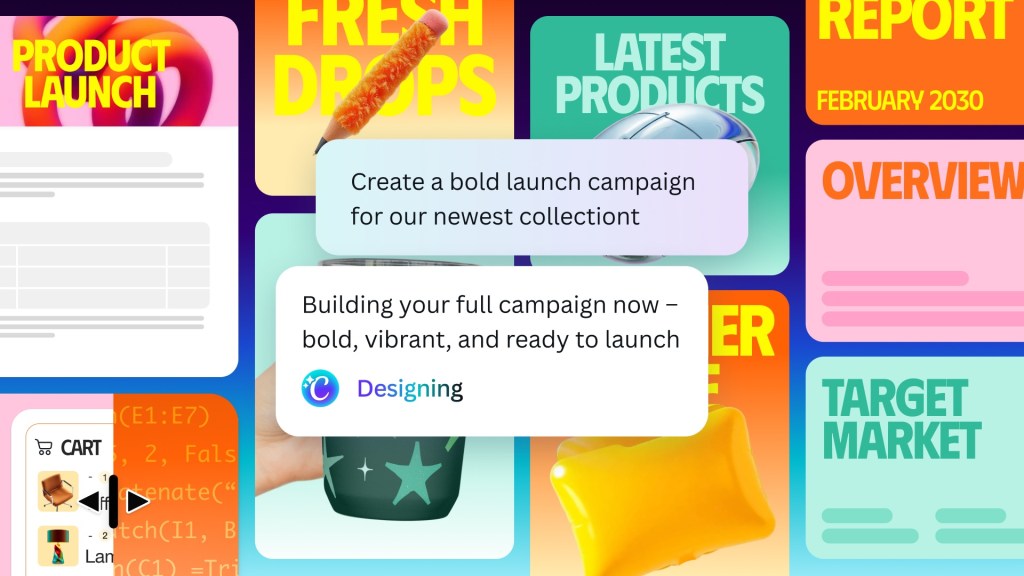
Canva dropped Canva AI 2.0 at its Create conference in Los Angeles, positioning the platform far beyond its design roots and into full workplace productivity. The update introduces a unified conversational interface powered by Canva’s own generative models — Proteus for style transfer, Lucid Origin for image generation, and I2V for image-to-video. Canva claims these models are up to 7x faster and 30x cheaper than comparable frontier alternatives. The agentic system lets users describe what they need in natural language, and it handles everything from creation to editing to publishing. Initially rolling out to the first million users, Canva AI 2.0 represents a bold bet that agentic AI can anchor everyday workplace workflows.
Stellantis and Microsoft Announce Five-Year AI Partnership

Stellantis and Microsoft signed a five-year strategic collaboration to co-develop more than 100 AI initiatives across sales, customer care, and operations. The partnership targets a 60% datacenter footprint reduction by 2029, strengthens Stellantis’ global cyber defense center with AI-driven cybersecurity analytics, and has already rolled out Microsoft 365 Copilot to 20,000 employees. It’s a textbook example of how enterprise AI adoption is shifting from pilot programs to full-scale multi-year commitments.
Stanford AI Index: China Has Nearly Erased the U.S. AI Lead
Stanford HAI’s 2026 AI Index Report shows the U.S. leads China by just 2.7% on top model performance as of March 2026 — a gap that has effectively closed. American and Chinese models have traded the lead multiple times since early 2025. The U.S. still holds structural advantages in hardware control, private capital, and talent concentration, while China leads in publication volume, patent filings, and organizational adoption rate. Perhaps most notable: it’s no longer a two-country race, with South Korea leading in AI patents per capita and 44 countries now operating state-backed supercomputing clusters.
Q1 2026 Venture Funding Shatters Records at $300 Billion

The first quarter of 2026 produced $300 billion in global venture funding across 6,000 startups — more than double the previous quarterly record. AI was the primary catalyst, with headliners including OpenAI’s $122 billion raise backed by Amazon, Nvidia, and SoftBank, as well as Anthropic’s $30 billion Series G. Foundational AI startup funding in Q1 alone doubled the total for all of 2025, underscoring an unprecedented concentration of capital flowing into the sector.
80% of Enterprise Workers Are Still Rejecting AI Tools
Despite the billions pouring in, a new report from Fortune highlights a growing tension on the ground: 80% of enterprise workers are avoiding or outright rejecting AI tools. The resistance ranges from quiet non-adoption to active pushback, and it comes at a time when executives are aggressively deploying AI across organizations. Separately, a Gartner survey found that only 28% of AI use cases in infrastructure and operations fully meet ROI expectations, with 20% failing outright. The data suggests that the industry’s adoption problem isn’t just about technology — it’s about trust and change management.
Global Quantum + AI Challenge Launches with $200K in Prizes

The 2026 Global Quantum + AI Challenge opened applications on April 16, awarding $200,000 across five enterprise challenges. Major partners include Airbus, Cleveland Clinic, E.ON, HSBC, and Volkswagen Group Innovation, with Amazon Braket and Classiq providing technology enablement. The challenge targets sectors where computational performance drives competitive advantage — from materials discovery to energy infrastructure optimization — signaling that quantum-AI convergence is moving from theory to applied enterprise use cases.
The Big Picture
Today’s stories paint a picture of an AI industry at full throttle and full tension. Capital is flooding in at record-breaking levels, platforms like Canva are shipping agentic AI to millions of users, and automakers are signing five-year AI deals. But the cracks are visible too: most enterprise workers don’t want to use these tools, only a fraction of AI deployments meet their ROI targets, and the geopolitical landscape is tightening as China closes the gap with the U.S. The next chapter of AI won’t be defined only by what gets built — it’ll be defined by whether organizations can bring people along for the ride.
Sources
- TechCrunch – Canva’s AI Assistant Can Now Call Various Tools to Make Designs for You
- BusinessWire – Canva Unveils Canva AI 2.0
- SiliconANGLE – Canva Unveils Canva AI 2.0 as Agentic System
- Stellantis – AI-led Strategy and Digital Transformation with Microsoft
- Microsoft – Stellantis Collaboration Announcement
- Stanford HAI – 2026 AI Index Report
- Fortune – Stanford: China Has ‘Nearly Erased’ U.S. AI Lead
- Crunchbase News – Q1 2026 Shatters Venture Funding Records
- Crunchbase News – Foundational AI Startup Funding Doubled
- Fortune – Most Workers Are Rejecting AI
- Gartner – Organizations with Successful AI Initiatives
- The Quantum Insider – 2026 Global Quantum + AI Challenge


Responses