Handoff is Dead: Welcome to the “Visual Vibe” Era

If you’re still Alt-Tabbing between Figma and VS Code, you are officially doing it the hard way.
The tool drops over the last ten days have confirmed a theory we’ve had in this community for months: The “Frontend Developer” and the “UI Designer” are merging into a single role. Let’s call it the Product Director. And the tech stack just got a massive upgrade.
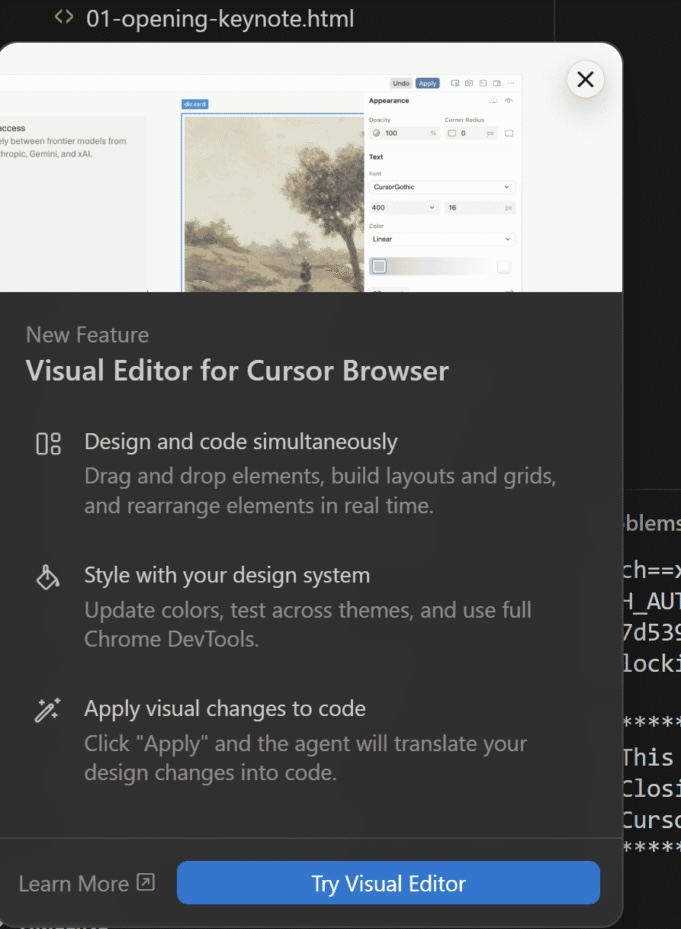
Cursor 2.2: The “Point and Vibe” Update
We need to talk about the new Visual Editor in Cursor 2.2. I know, I know—the UI changes every week and it’s annoying. But the new “Point and Prompt” feature is legitimate magic. You can now click a rendered component in your browser sidebar and tell the agent, “Make this padding match the header” or “Swap these grid items.”
It doesn’t just patch the DOM; it refactors the underlying React props and CSS variables. This isn’t “inspect element” anymore; it’s surgery. If you aren’t using this to tweak your UI in real-time, you’re wasting hours on CSS trial-and-error.
DeepSeek R1: The “Slow” Brain for Your Backend
While Cursor handles the pretty stuff, DeepSeek R1 has emerged as the heavy lifter for logic. It’s open-source (MIT license, finally!), and yes, it’s slower than Gemini Flash. But that’s the point.
Use Gemini 2.0 Flash for your “fast” loops—vision-based coding, video inputs, and quick scaffolding. But when you hit a nasty architectural wall? Switch to DeepSeek R1. Treat it like a senior engineer you consult only when necessary. Let it “think” for 60 seconds while you grab a coffee. It doesn’t hallucinate the small stuff; it plans.
The New 2026 Workflow
Here is the stack I’ve been testing since New Year’s Day:
1. Midjourney V7 (Draft Mode): Generate your UI assets and mood boards in seconds using the new voice prompts.
2. Gemini 2.0 Flash: Feed those screenshots into the context window to scaffold the initial code.
3. Cursor Visual Editor: Polish the UI by clicking and prompting, not typing.
4. DeepSeek R1: Validate your database schema and API routes.
The Vibe Check
We used to write code to build visuals. Now, we use visuals to write code. The barrier isn’t syntax anymore; it’s taste. If you have the eye, you now have the engineering team built-in.
Go build something beautiful.






Responses