Sub-Agents: When Vibe Coding Scales

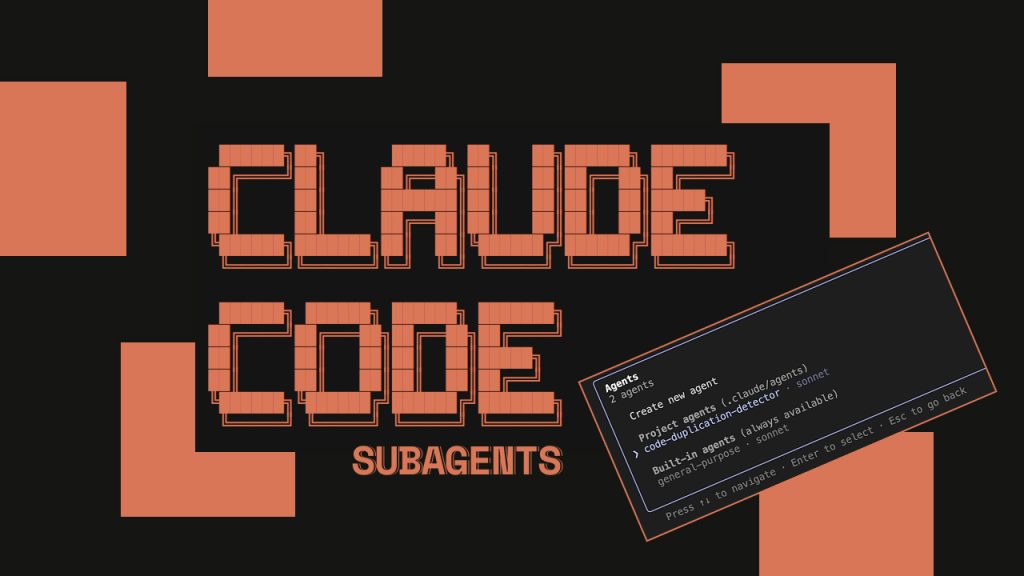
In mid-December, Claude Code got a quiet but significant update: sub-agents. On paper it sounds incremental. In practice, it fundamentally changes what’s possible with AI-powered coding at scale.
The problem is simple. As projects grow complex, AI models lose context—they drift, circle on irrelevant bugs, contradict earlier decisions. It’s like working with a developer who codes 100x faster but forgets everything after an hour.
Sub-agents fix this by letting the main agent spawn separate Claude instances for specialized tasks. Each gets fresh context, clean token window, specific instructions. They work in parallel. Entirely separate loops.
Why It Matters
A sub-agent with clean context outperforms a main agent already processing 50,000 tokens. It’s not that the AI gets smarter—it just has no baggage, no drift from previous work.
In practice: main agent drafts structure, plan reviewer catches gaps, security agent audits code, all simultaneously. A week-long refactor that typically requires human oversight dropped to 8 hours with production-ready output.
It’s conscious delegation. Traditional vibe coding requires hope. With sub-agents, responsibility is distributed. The model knows when to call a specialist.
The Reality
It’s not magic. Poor delegation actually doubles the work. And orchestration requires thinking about what each agent does, in what order, how they communicate. For small projects, it’s overhead.
Also: documentation matters now. CLAUDE.md files become the actual project blueprint. If they’re imprecise, everything suffers.
The Bigger Picture
This marks vibe coding’s shift from “iteration tool” to “architecture framework.” OpenAI launched AgentKit (visual orchestration) in October. Anthropic added Agent Skills. The conversation moved from “how do I generate code?” to “how do I organize agents working together?”
If 2025 proved vibe coding works, 2026 will prove it needs team management. Not single agents. Agent teams. Sub-agents are the first real tool for scaling this way.
Solo vibe coding still works. But for teams, large codebases, strict standards—sub-agents are the missing piece.




Responses