SWE-Bench Pro Just Exposed What AI Coding Can Actually Do

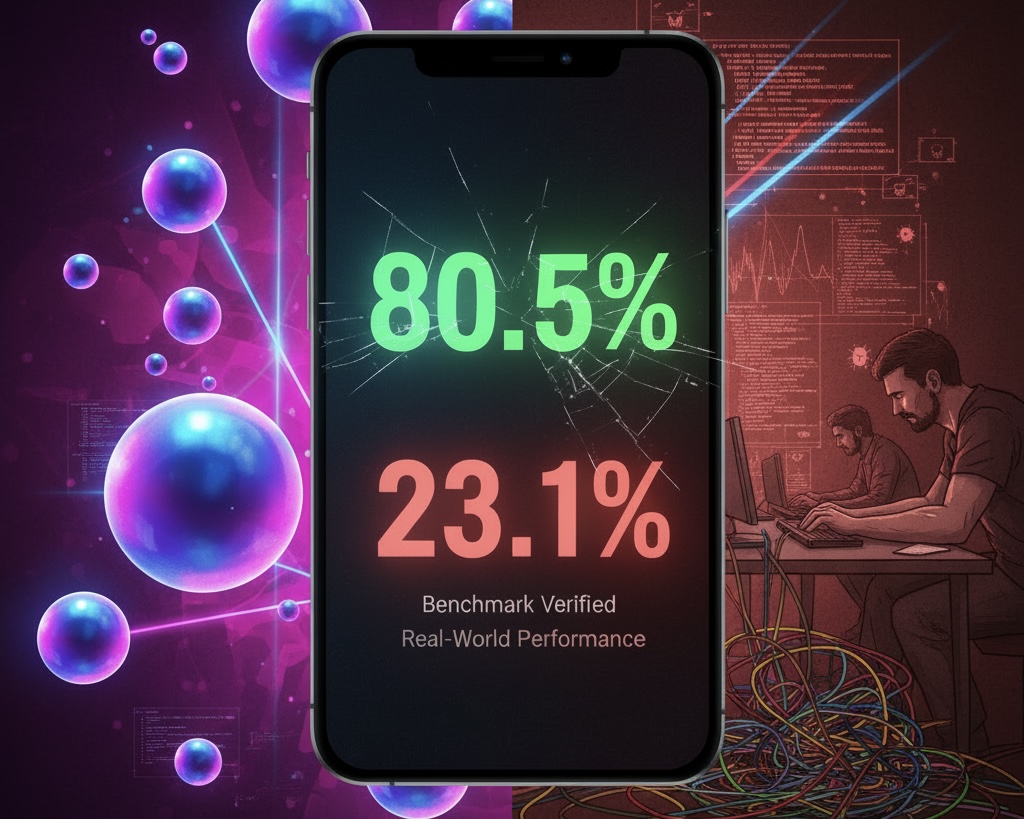
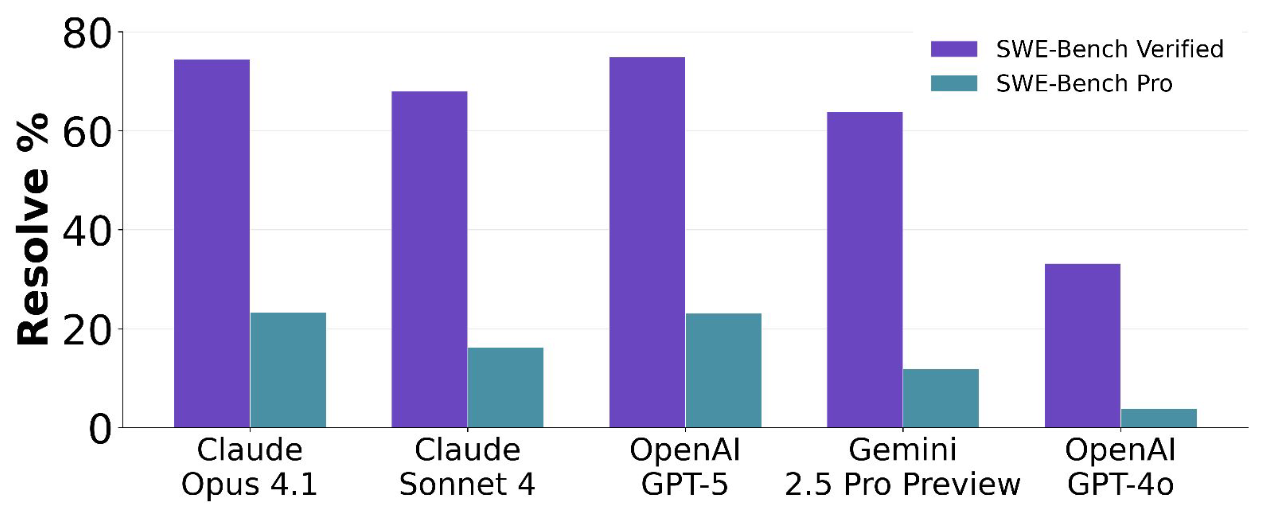
This week, Scale AI released SWE-Bench Pro, a new benchmark for evaluating AI agents on real software engineering tasks. The results were brutal: every model—Claude Opus 4.5, GPT-5.2, Gemini 3—collapsed. Where they scored 70-80% on older benchmarks, they scored 23% on SWE-Bench Pro.
The Benchmark That Stopped Gaming
SWE-Bench Verified, the standard metric for over a year, had a fatal flaw: data contamination. Models were trained on the open-source code repositories used in the benchmark. They weren’t solving problems; they were remembering solutions.
SWE-Bench Pro fixes this. It uses GPL-licensed open-source repos specifically chosen to resist training data contamination. It includes 1,865 real GitHub issues from 41 professional repositories. And it forces models to fix actual bugs in codebases they’ve never seen.
The result: Claude Opus 4.5 dropped from 80.9% to 23.1%. GPT-5.2 fell from 80% to 23.3%. Even specialized coding models collapsed.
What This Actually Means
This isn’t a failure of AI coding. It’s a recalibration of expectations. SWE-Bench Pro measures something fundamentally harder: can an AI agent autonomously navigate an unfamiliar codebase, understand non-obvious context, propose fixes that don’t break other systems, and handle edge cases without guidance?
The answer, today, is “sometimes.” The best models solve roughly 1 in 4 real-world bugs autonomously.
The Reality Check Every Vibecoder Needs
AI is powerful for rapid iteration, pattern synthesis, and boilerplate elimination. But it’s not an autonomous replacement for engineering judgment. SWE-Bench Pro proves that the 23% solve rate reflects the actual difficulty: real bugs in unfamiliar systems require reasoning that current models sometimes lack.
Claude and GPT remain the strongest performers. But they’re tools that amplify human capability, not replacements for it. The vibecoders winning in 2026 are those treating AI as a teammate that accelerates decisions, not as a system that removes human judgment.
SWE-Bench Pro is the benchmark that separates hype from reality. Study it, understand your tools, and build accordingly.






Responses