Your Laptop Just Became Powerful Enough to Run AI Alone


You don’t need cloud subscriptions anymore. By mid-January 2026, the bottleneck has shifted completely: your device is now capable of running enterprise-grade AI models without pinging a server, waiting for response times, or burning through API costs.
This isn’t hype. Open-source models like Falcon-H1R 7B ship with near-perfect reasoning on math and coding benchmarks—comparable to commercial systems 10x larger—while processing 1,500 tokens per second on a single GPU. The compact architecture means M-series Macs, high-end laptops, and even some tablets can now host these models locally.
From “Cloud-Dependent” to “Edge-First”
For the past two years, every serious AI workflow required cloud access. You needed credit cards, API keys, rate limits, and patience. That forced a particular kind of work: batch processing, careful token-counting, strategic caching of results.
Now the infrastructure is inverted. The trend is “edge-first inference”—keeping computation where the data lives, which is on your device. Companies like Lightricks have already shipped on-device video generation using Nvidia’s new technology, eliminating cloud dependencies entirely.
What does this mean for you? Instant latency, zero API costs, and genuine privacy.
Small Models That Actually Work
The real insight driving this shift is counterintuitive: you don’t need GPT-4-scale models for most real work. Small Language Models (SLMs) achieve 10–30× reductions in latency and energy compared to their massive counterparts, while delivering comparable results on specific, focused tasks.
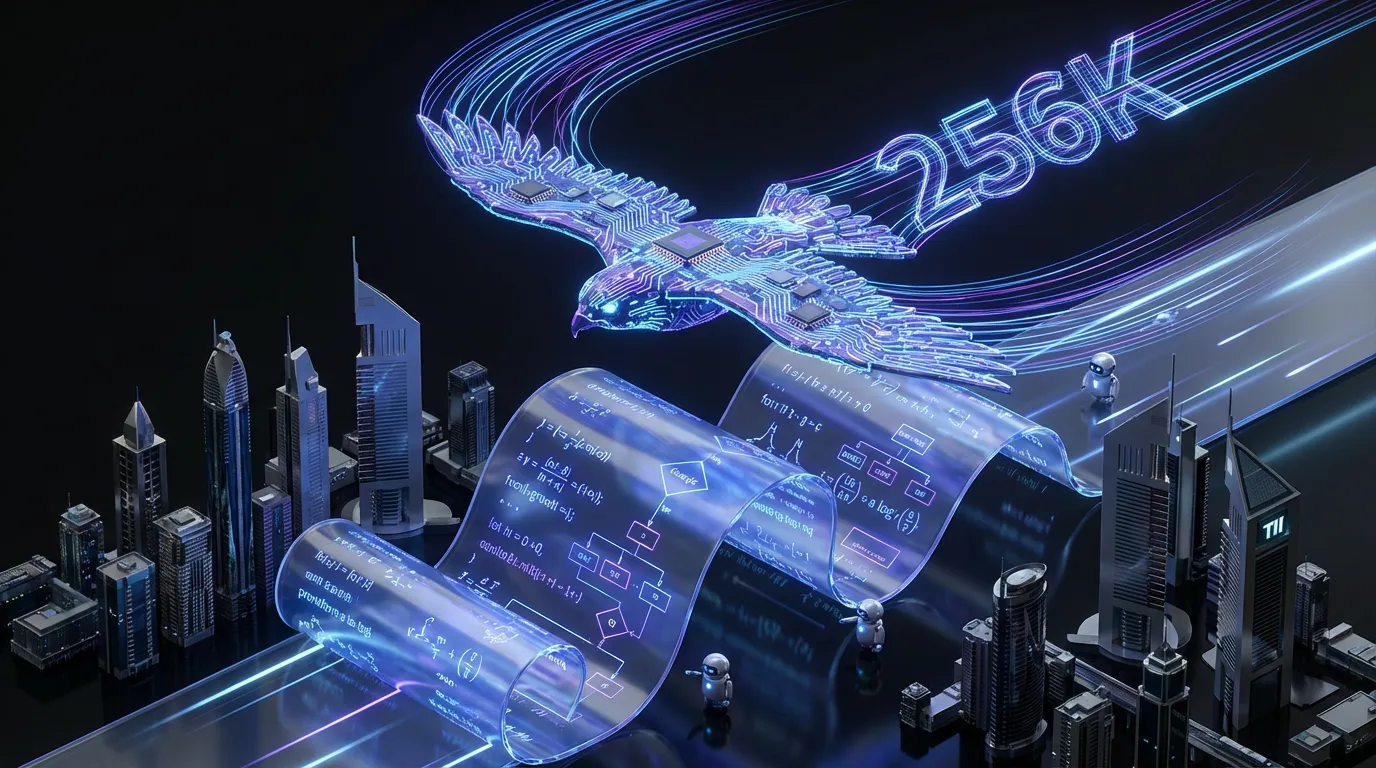
Falcon-H1R exemplifies this. It’s a 7-billion-parameter model—small enough to fit on accessible hardware—yet outperforms systems with 32 billion parameters on coding benchmarks. This is because it uses a Transformer-Mamba hybrid architecture with a feature called DeepConf (Deep Think with Confidence), which filters low-quality reasoning at runtime without retraining.
The practical implication? You can now build AI-powered applications without betting your infrastructure on cloud providers.
What This Unlocks
Running models locally changes the calculus for creative work:
No rate limits — Generate as much as you want without watching token counts.
Raw speed — Real-time feedback loops instead of waiting for cloud responses.
Actual privacy — Your prompts, generations, and data never leave your machine.
Cheaper iteration — Experiment without worrying about API costs eating your budget.
The Infrastructure Shift Is Real
This isn’t a gradual trend—it’s infrastructure rearchitecture happening right now. Microsoft just announced a “Community-First AI Infrastructure” initiative that prioritizes local deployment over hyperscaler dependency. Cisco is aggressively building enterprise networking that assumes “distributed AI closer to the edge where data is created” rather than centralized cloud clusters.
The message from the industry is clear: 2026 is the year agentic AI moves from cloud experiments to local execution.
Your Actual Play
If you’re still treating AI as a cloud-dependent service, you’re about a year behind. Spend an hour downloading an open-source model like Falcon-H1R or Mistral from Hugging Face. Run it locally. Feel the difference in speed. Then ask yourself: why am I paying cloud APIs when my laptop can do this?
The infrastructure democratization has already happened. Most of the industry just hasn’t caught up yet.






Responses