
April 06, 2026 – AI Daily Recap

The weekend brought no rest for the AI industry. From a major leadership shakeup at OpenAI to Microsoft’s eyebrow-raising legal disclaimer and a landmark open-source release from China, here’s everything that happened in AI over the past 24 hours.
OpenAI Reshuffles Its C-Suite as COO Steps Back and AGI Chief Takes Medical Leave
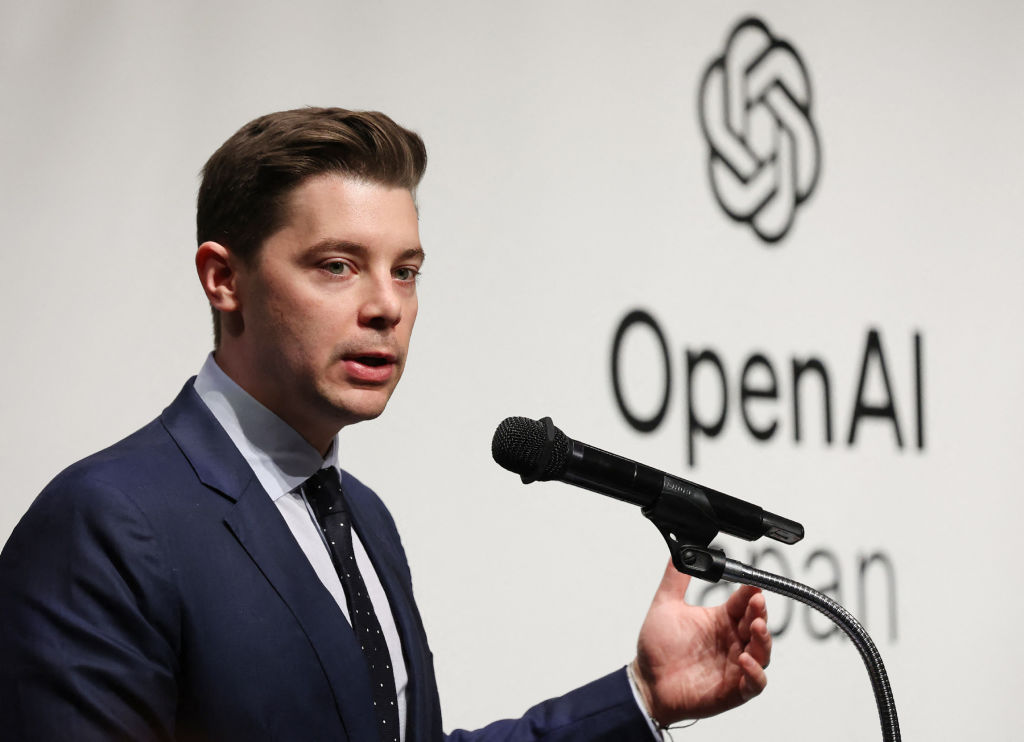
OpenAI announced a significant leadership reshuffle late last week that touches nearly every corner of the company’s executive team. COO Brad Lightcap is stepping back from his operational role to lead “special projects,” including overseeing OpenAI’s enterprise software joint venture with private equity partners. Meanwhile, Fidji Simo, who had been leading the company’s AGI deployment efforts, is taking several weeks of medical leave to address a relapse of postural orthostatic tachycardia syndrome. Greg Brockman will temporarily take over the product organization, while Chief Strategy Officer Jason Kwon, CFO Sarah Friar, and new CRO Denise Dresser will split business oversight. CMO Kate Rouch is also stepping down to focus on cancer recovery. The reshuffle comes at a pivotal moment — OpenAI recently raised $122 billion in funding at an $852 billion valuation and is reportedly eyeing an IPO.
Microsoft Quietly Labels Copilot “For Entertainment Purposes Only”

In what might be the most ironic legal fine print in tech history, Microsoft’s terms of use for Copilot explicitly state the product is “for entertainment purposes only” and that users should “not rely on Copilot for important advice.” The disclaimer, last updated in October 2025, gained renewed attention this weekend after Tom’s Hardware flagged the language. The terms also state Microsoft makes “no warranty or representation of any kind” about the product and cannot promise responses won’t infringe copyrights or trademarks. A Microsoft spokesperson told outlets the company will be updating what they called “legacy language,” insisting it no longer reflects how Copilot is used today. The timing is awkward, given Microsoft’s aggressive push to embed Copilot into enterprise workflows at premium price points.
DeepSeek V4 Enters the Arena With One Trillion Parameters and Open Weights
China’s DeepSeek V4 continues to send shockwaves through the AI community. The one-trillion-parameter Mixture-of-Experts model, released under the Apache 2.0 license, activates only roughly 37 billion parameters per token — keeping inference costs remarkably low while delivering performance competitive with leading proprietary models. What makes V4 particularly striking is its training efficiency: an estimated $5.2 million to train, a fraction of what Western labs spend on frontier models. The architecture introduces Manifold-Constrained Hyper-Connections, Engram conditional memory, and DeepSeek Sparse Attention, achieving 97% Needle-in-a-Haystack accuracy at million-token context lengths. Perhaps most strategically significant, DeepSeek optimized V4 to run on Huawei Ascend and Cambricon chips, proving that frontier-class models can be trained entirely on Chinese-made silicon despite US export controls.
Snowflake and OpenAI Ink $200 Million Agentic AI Partnership
Snowflake and OpenAI have formalized a multi-year, $200 million partnership aimed at accelerating the deployment of agentic AI across enterprise data platforms. Under the deal, OpenAI’s models — including GPT-5.2 — will become natively available to Snowflake’s 12,600 global customers through Snowflake Cortex AI across all three major cloud providers. The partnership’s centerpiece is autonomous agents that can securely reason over proprietary data, execute complex workflows, and make real-time decisions with minimal human oversight. Engineering teams from both companies will collaborate on features leveraging OpenAI’s Apps SDKs, AgentKit, and APIs. The deal underscores a broader industry trend: enterprise agentic AI is moving from pilot to production, and the data platform layer is where the action is.
Ledger CTO Warns AI Is Making Crypto Hacks Cheaper and Easier
The intersection of AI and cybersecurity got a stark warning this weekend. Ledger CTO Charles Guillemet told CoinDesk that artificial intelligence is fundamentally breaking the economics of cybersecurity by making it faster and cheaper to launch attacks on crypto platforms. With hacks and exploits already causing $1.4 billion in crypto losses over the past year, Guillemet argues the situation will only worsen as AI tools lower the barrier to entry for attackers. His prescription: a shift toward formal verification, hardware-based security, and offline storage, with users operating under the assumption that many on-chain systems will eventually fail. It’s a sobering reminder that the same technology powering productivity gains is simultaneously supercharging threat actors.
New York Times Cuts Ties With Freelancer Over AI-Generated Plagiarism

The New York Times has permanently ended its relationship with freelance book reviewer Alex Preston after discovering he used an AI tool to draft a review that closely mirrored a previously published Guardian piece. The review in question covered Jean-Baptiste Andrea’s novel Watching Over Her and was published in January 2026. A reader flagged the similarities, and after an investigation, Preston admitted to using an AI tool and failing to catch the overlapping material. The Times called it a “serious violation” of its standards and added an editor’s note to the original piece. The incident highlights a growing tension in media: as AI writing tools become ubiquitous, the line between assistance and outsourcing — and the accountability that comes with it — remains dangerously blurry.
The Big Picture
Today’s news paints a picture of an industry in rapid maturation — and all the growing pains that come with it. OpenAI’s executive shuffle reveals the organizational strain of scaling a company at breakneck speed while preparing for an IPO. Microsoft’s “entertainment only” disclaimer exposes the gap between AI marketing and legal reality. DeepSeek V4 proves that open-source models trained on non-Western hardware can compete at the frontier, reshaping the geopolitical calculus of AI development. And the NYT plagiarism incident serves as a cautionary tale for anyone using AI tools without rigorous oversight. The through-line is clear: AI’s capabilities are advancing faster than the institutions, policies, and norms designed to govern them.
Sources
- TechCrunch — OpenAI Executive Shuffle Includes New Role for COO Brad Lightcap
- Bloomberg — OpenAI COO Shifts Out of Role, AGI CEO Taking Medical Leave
- TechCrunch — Copilot Is “For Entertainment Purposes Only,” According to Microsoft’s Terms of Use
- Tom’s Hardware — Microsoft Says Copilot Is for Entertainment Purposes Only
- NxCode — DeepSeek V4 (2026): 1T Parameters, Full Specs
- QverLabs — DeepSeek V4: Inside China’s Trillion-Parameter Open-Source Challenger
- Snowflake — Snowflake and OpenAI Forge $200 Million Partnership
- CIO Dive — Snowflake, OpenAI Strike $200M Deal to Bolster Agentic AI Use
- CoinDesk — AI Is Breaking Crypto Security by Making Hacks Cheaper and Easier
- The Decoder — The New York Times Drops Freelancer Whose AI Tool Copied From Existing Book Review
- The Wrap — New York Times Cuts Ties With Book Review Writer Over AI Use




Responses