
April 13, 2026 – AI Daily Recap

The week kicks off with Anthropic embedding Claude directly into Microsoft Word, a bureaucratic logjam stalling America’s AI chip export ambitions, and a bold new vision from Meta and KAUST for computers built entirely from neural networks — plus breakthroughs in energy efficiency, an escalating global AI arms race, and a wave of state-level AI legislation.
Anthropic Launches Claude for Word Beta
Anthropic made a significant enterprise play on April 10 with the public beta launch of Claude for Word, a native sidebar add-in for Microsoft Word available on both Mac and Windows via the Microsoft AppSource marketplace. The integration reads, drafts, and edits documents while preserving formatting, and surfaces every change as a tracked change users can accept or reject. What makes it especially powerful is its cross-application awareness — Claude for Word connects with Claude for Excel and Claude for PowerPoint, allowing a single conversation thread to span all three open documents simultaneously. Legal contract review is the headline use case, with Anthropic explicitly targeting lawyers and financial professionals. The beta is currently limited to Team and Enterprise plan subscribers, with broader access expected in future rollout phases.
Trump’s AI Chip Export Push Stalls in Bureaucratic Bottleneck
The Trump administration’s ambitious plan to supercharge global sales of American AI chips is running headlong into a wall of red tape. According to Bloomberg, the Bureau of Industry and Security — the federal agency overseeing sensitive technology exports — is struggling with licensing delays, staffing attrition of nearly 20% among rulemaking and licensing staff, and a lack of clear policy direction. The administration’s strategy centers on exporting “full-stack” American AI systems that bundle chips, models, security, and services for allied customers, and it opened a call for proposals this month to seed those deals. But without the staff and processing capacity to keep up, the gap between ambition and execution continues to widen — a problem with real geopolitical stakes as China accelerates its own semiconductor capabilities.
Meta and KAUST Propose Neural Computers
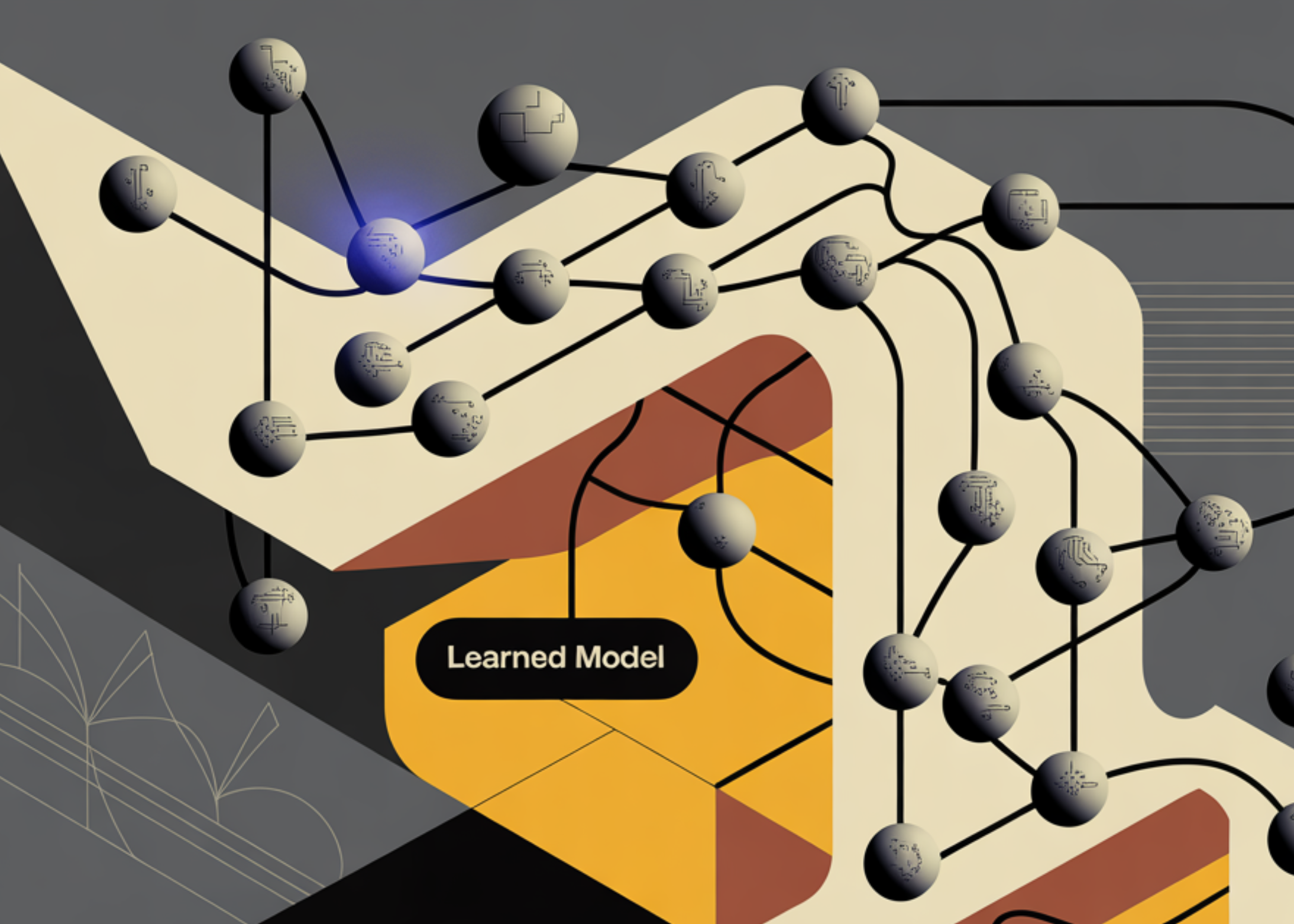
Researchers from Meta AI and KAUST published a paper introducing Neural Computers (NCs) — a proposed machine architecture in which the neural network itself acts as the running computer, rather than sitting as a layer on top of one. The concept unifies computation, memory, and I/O operations into a single learned runtime state. The team presented two working video-based prototypes, NCCLIGen and NCGUIWorld, built on the Wan2.1 video generation model, demonstrating early runtime primitives in both command-line and graphical interface settings. The long-term goal is a Completely Neural Computer that is Turing complete, universally programmable, and behavior-consistent. It’s a radical rethinking of what a computer could be — and while still early, it signals a research direction that could reshape hardware and software design if it matures.
Neuro-Symbolic AI Cuts Energy Use by 100x
A team at Tufts University has unveiled a neuro-symbolic AI approach that slashes energy consumption by up to 100 times while actually improving accuracy. The method, developed in the laboratory of Matthias Scheutz, combines traditional neural networks with symbolic reasoning — mirroring how humans break problems into steps and categories. In benchmarks using the Tower of Hanoi puzzle, the neuro-symbolic system achieved a 95% success rate compared to just 34% for traditional models, while reducing training time from over 36 hours to just 34 minutes. The model used only 1% of the energy during training and 5% during operation. With AI systems already consuming over 10% of U.S. electricity, this kind of efficiency breakthrough could prove transformative for the industry’s sustainability challenges.
The Global AI Arms Race Escalates
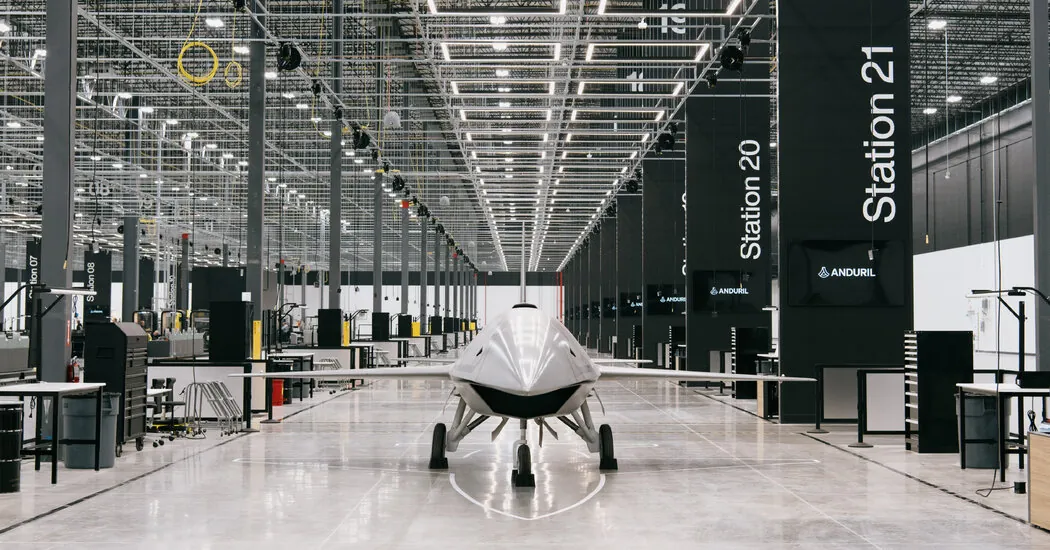
A New York Times investigation published this weekend reveals the accelerating scope of the global AI arms race, with the U.S., China, Russia, and other nations rapidly developing AI-enabled autonomous weapons systems. The investigation found that U.S. military autonomous drone programs are actually lagging behind China’s capabilities. A Chinese institution recently supervised roughly 200 autonomous vehicles simultaneously in a drone-swarm test, demonstrating serious experimentation with mass coordination. On the American side, Anduril won a 10-year U.S. Army contract potentially worth up to $20 billion, and by 2026 each of the Army’s 10 active combat divisions will be equipped with approximately 1,000 drones. Congress issued a primer on lethal autonomous weapons on March 26 noting there is still no agreed international definition of such systems — a regulatory vacuum that militaries worldwide are racing to exploit.
Three States Pass New AI Laws as Regulation Wave Builds
The state-level AI regulation push continues to gain momentum. According to Troutman Pepper’s weekly tracker, three states passed AI bills last week. Nebraska enacted LB 525, the Conversational AI Safety Act, which requires chatbot operators to disclose to minors that they are interacting with AI and prohibits services from misrepresenting themselves as human. Maryland passed HB 895 addressing algorithmic pricing — the use of AI to set prices for goods and services. Maine passed LD 2082 restricting AI-provided therapy and psychotherapy to licensed professionals only. Meanwhile, Hawaii, Oklahoma, California, and Connecticut all advanced chatbot regulation bills, and California pushed forward three separate healthcare AI bills. The pattern is clear: in the absence of comprehensive federal AI legislation, states are filling the vacuum with a patchwork of targeted rules.
The Big Picture
Today’s stories paint a picture of an AI industry simultaneously pushing forward on every front and straining under its own momentum. Anthropic’s move into the Microsoft Office suite shows how frontier AI companies are no longer content to offer chatbots — they want to be embedded in the tools people already use for real work. Meanwhile, the gap between policy ambition and institutional capacity is visible everywhere, from the Commerce Department’s chip export bottleneck to the regulatory void around autonomous weapons. The most hopeful signal may be the Tufts neuro-symbolic breakthrough, which suggests the industry’s energy crisis might have solutions that don’t require building more data centers. And Meta’s Neural Computer research reminds us that for all the focus on today’s competitive battles, there are researchers thinking about entirely different paradigms for what computing could become.
Sources
- Anthropic Launches Claude Beta for Word — Cybersecurity News
- Anthropic Targets Lawyers With Claude For Word — Artificial Lawyer
- Anthropic Launches Claude AI Sidebar for Microsoft Word — Build Fast with AI
- Trump’s AI Chip Export Push Stymied by Bureaucratic Bottleneck — Bloomberg
- D.C. Red Tape Chokes Trump’s AI Chip Export Blitz — Hoodline
- Meta AI and KAUST Propose Neural Computers — MarkTechPost
- No Code Required: Meta AI Wants the Model to Be the Machine — Pebblous
- AI Breakthrough Cuts Energy Use by 100x — ScienceDaily
- AI System Could Cut Energy Use by 100 Times — Engineering and Technology
- US-China AI Arms Race: Autonomous Weapons — Creati AI
- Proposed State AI Law Update: April 13, 2026 — Troutman Pepper





Responses