
DeepSeek V4 Is Built Different

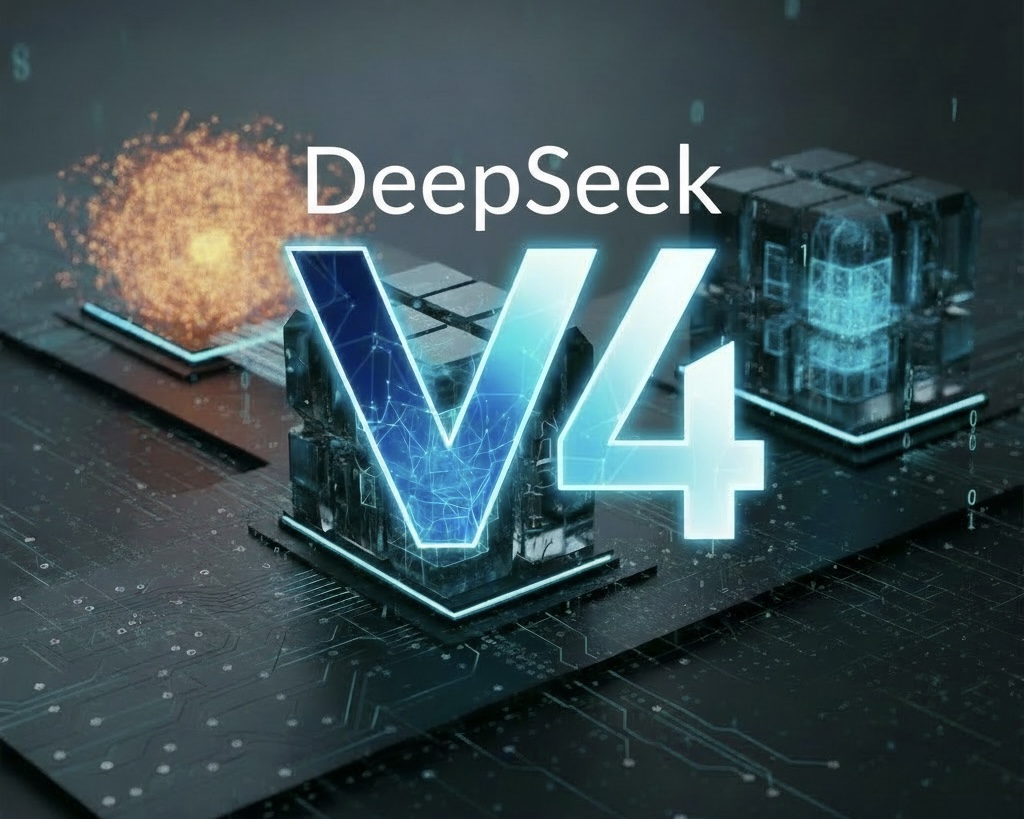
Coming mid-February 2026, DeepSeek V4 isn’t just another model release. It is a fundamental architectural shift that separates how AI processes static information from how it reasons. If you build software, this research breakthrough directly solves the long-context bottleneck that plagues current development workflows.
The Memory-Reasoning Split
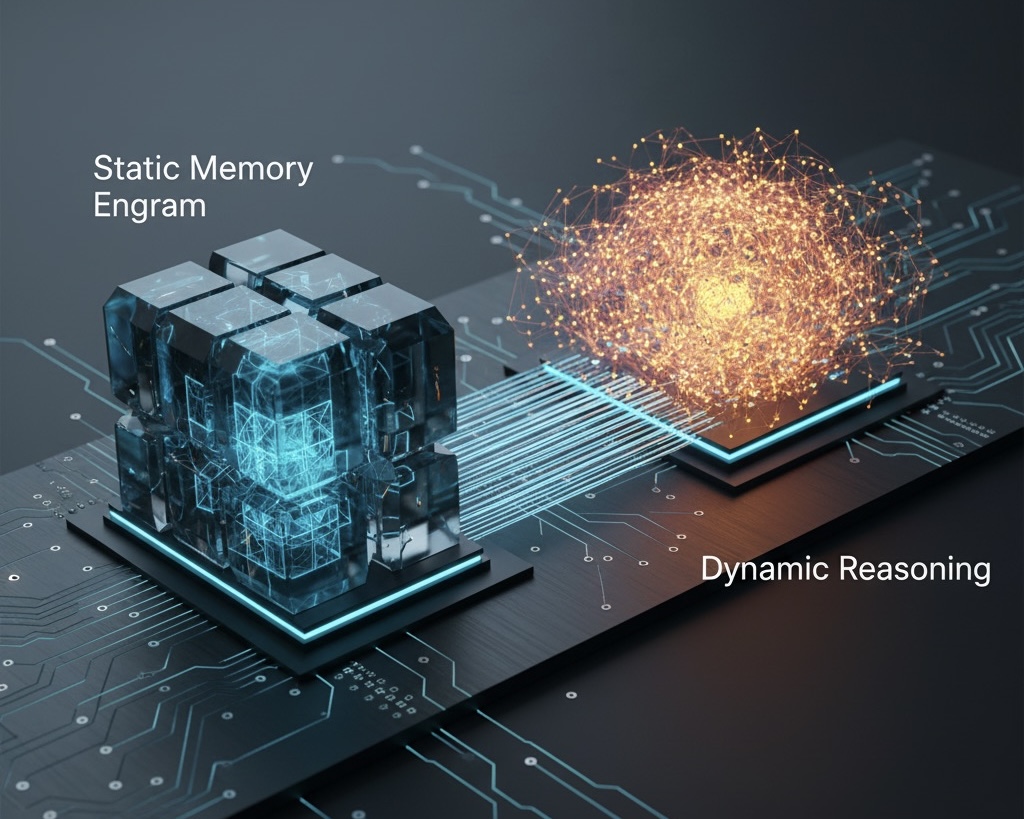
Current models waste expensive GPU resources repeatedly recalculating facts. DeepSeek’s new Engram system offloads static knowledge to a deterministic hash table stored in standard DRAM. By using constant-time lookup for memory, the model frees up its neural computation for what actually matters: reasoning through your logic.
Solving the Repository-Level Problem
For developers, the biggest win is in repository-level reasoning. Code is inherently long-context; you need the model to understand dependencies across thousands of files. Traditional attention mechanisms become prohibitively expensive as sequence length grows, leading to hallucinations or lost context.
Because Engram retrieval costs the same whether your context is 10k or 1 million tokens, V4 can maintain coherence across an entire monorepo. Internal benchmarks show V4 outperforming Claude Opus and GPT-4o in complex architectural refactors and cross-file bug hunting.
What to Expect in February
Scheduled for release around the Lunar New Year, V4 will offer a heavyweight version for complex builds and a lighter version for daily tasks. Like its predecessors, it will be open-source, allowing you to run it locally and keep your proprietary codebase off external servers.
The era of just adding more GPUs is ending. DeepSeek V4 proves that architectural elegance—specifically the separation of memory and compute—is the new frontier for production-grade AI.




Responses