March 22, 2026 – AI Daily Recap

Elon Musk unveiled a $25 billion chip factory to rival TSMC, Samsung committed a record $73 billion to AI chips, Alibaba dropped a 9B-parameter model that runs offline on iPhones, and Tencent wired a billion WeChat users into the agentic AI era.
Musk Unveils Terafab: A $25 Billion Chip Factory for Tesla, SpaceX, and xAI
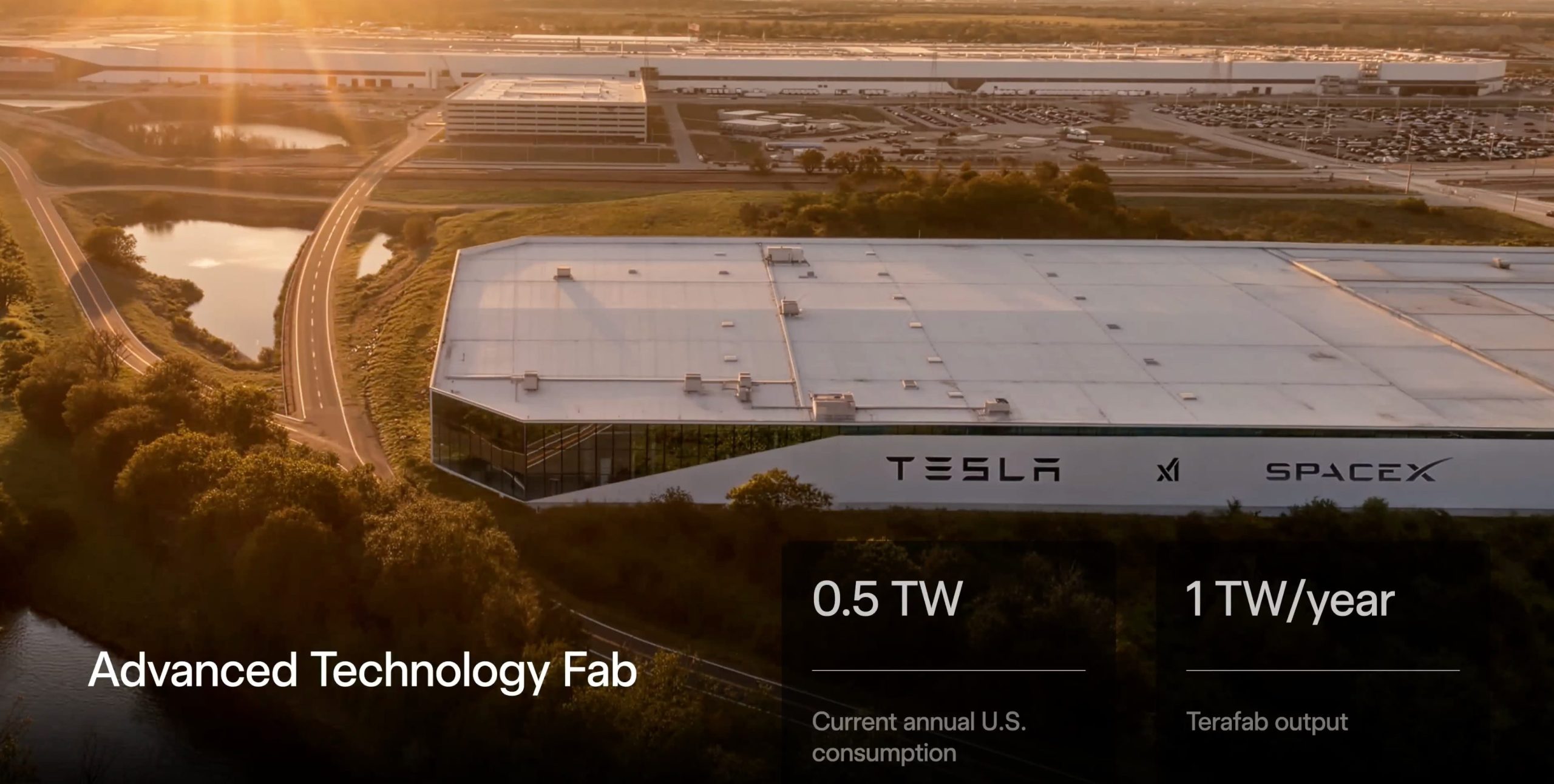
Elon Musk has announced Terafab, a joint $25 billion chip fabrication facility between Tesla, SpaceX, and xAI, to be built at the North Campus of Giga Texas in Austin. The facility will target 2-nanometer process technology and aims to produce 1 terawatt of annual AI compute output — roughly 70% of TSMC’s entire global capacity. Terafab will produce two chip categories: inference chips for Tesla vehicles and Optimus robots, and D3 chips for orbital AI satellites. Musk claimed 80% of output would serve space-based compute, arguing that solar irradiance and vacuum heat rejection make orbital AI viable. Skeptics note that Tesla has a history of delayed chip timelines — the AI5 has already slipped to mid-2027.
Samsung Commits Record $73 Billion to AI Chips
Samsung Electronics plans to invest a record 110 trillion won — roughly $73.2 billion — in AI chip research, development, and manufacturing facilities throughout 2026. That’s a 22% increase over last year and surpasses even TSMC’s estimated $50 billion capital expenditure for the same period. The spending is driven by surging demand for next-generation HBM4 memory chips, where rival SK Hynix currently dominates as Nvidia’s primary supplier. Samsung has already secured a deal to build Nvidia’s Groq 3 processors on its 4nm process and established a partnership to supply HBM4 chips to AMD.
Tencent Wires WeChat’s Billion Users into Agentic AI via OpenClaw
Tencent has launched ClawBot, integrating WeChat — with its 1.3 billion users — into the open-source OpenClaw agent framework. The move allows messaging-based agent commands within WeChat’s super-app ecosystem, turning everyday chat conversations into interfaces for AI-driven task execution. This is one of the first deployments of agentic AI at true social-platform scale, and it signals how conversational agents are becoming embedded infrastructure rather than standalone products. The security and abuse implications of an agent-enabled messaging platform serving a billion-plus users are significant and largely uncharted.
Alibaba’s Qwen 3.5 Small Runs GPT-Level Reasoning Offline on iPhones
Alibaba has released Qwen 3.5 Small, a 9-billion-parameter model that matches the reasoning performance of models 13 times its size on complex benchmarks — and runs entirely offline on recent iPhones. No cloud connection, no data transmission, no subscription required. The model represents the cutting edge of on-device AI: capable enough to be useful, small enough to be private. As Apple prepares to ship its Gemini-powered Siri, Alibaba is demonstrating that competitive AI can live entirely on the device, outside the reach of any cloud provider.
OpenAI Plans to Nearly Double Its Workforce to 8,000
OpenAI is targeting approximately 8,000 employees by the end of 2026, nearly doubling its current headcount. The expansion will focus on product development, engineering, research, and sales — the operational muscle required to commercialize frontier AI at scale. The growth comes as OpenAI surpasses $25 billion in annualized revenue and takes early steps toward a potential public listing later in 2026. Between the hiring surge, the advertising rollout, and the record funding round, OpenAI is rapidly transforming from a research lab into a full-spectrum technology conglomerate.
The Big Picture
March 22 was a day that crystallized just how global and industrial the AI competition has become. Musk’s Terafab is an explicit challenge to TSMC’s near-monopoly on advanced chip fabrication — and an admission that controlling compute supply is now as strategic as controlling the models themselves. Samsung’s $73 billion bet is the same logic applied at national scale. Meanwhile, the quiet wave of capable smaller models from Alibaba and Moonshot AI suggests the cost of frontier-level intelligence is plummeting faster than the mega-investments might imply. And Tencent’s ClawBot deployment raises a question the West hasn’t fully grappled with: what happens when agentic AI reaches a billion users through a messaging app, not a productivity tool?
Sources
- Elon Musk Unveils Chip Manufacturing Plans for SpaceX and Tesla — TechCrunch
- Tesla and SpaceX Announce $25B ‘Terafab’ Chip Factory — Electrek
- Musk Unveils Ambitious Terafab Plans — Benzinga
- Samsung’s $73 Billion AI Chip Investment — Android Headlines
- Samsung to Spend $73 Billion on Chip Expansion — Bloomberg
- AI News Roundup: March 12–22, 2026 — Prompt Injection
- AI Model Releases: March 22, 2026 — Labla.org
- Samsung Plans $73B Chip Investment — TipRanks




Responses